
 Arabic

UAE Restaurant Food Cost Percentage and Ways to Control It
A UAE restaurant’s food-cost target depends on its format: full-service venues commonly target 28% to 35%, while quick-service outlets may target 22%...

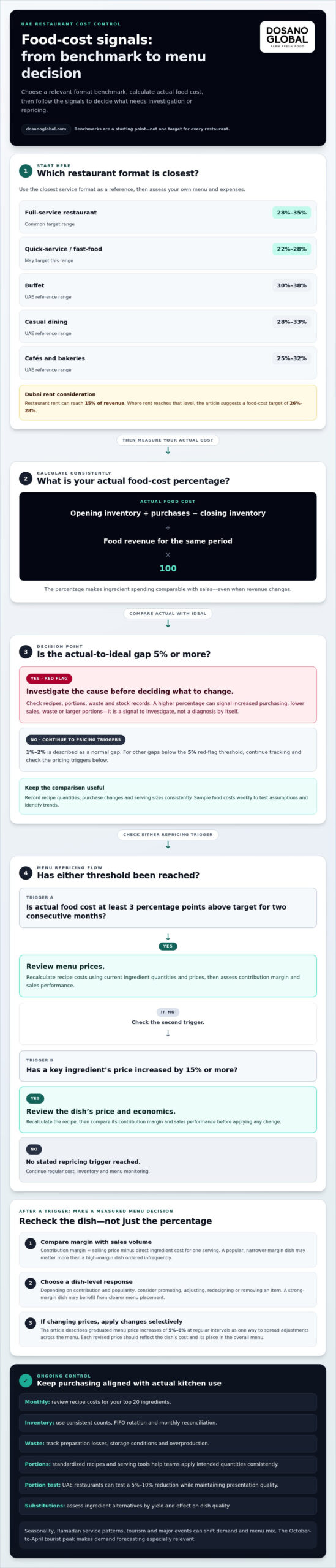
A UAE restaurant’s food-cost target depends on its format: full-service venues commonly target 28% to 35%, while quick-service outlets may target 22% to 28%. Managing food costs in the UAE hospitality sector means comparing actual spending with a target that fits your operation, rather than chasing one percentage for every restaurant.
Food costs shift with ingredient prices, portion sizes, spoilage and purchasing decisions, so a monthly total alone rarely shows what is driving margins. Track costs consistently to spot changes and make informed decisions about menu pricing and kitchen controls.
This guide explains how to calculate food cost percentage and why targets vary across UAE restaurant formats. It also covers menu margins, inventory and waste controls, ingredient choices, and how reliable supply can keep purchasing aligned with kitchen needs.
Key Takeaways
- Compare actual and ideal food costs to spot purchasing, portioning or waste issues; a gap of 5% or more calls for investigation.
- Review menu prices when actual food cost exceeds target by at least 3 percentage points for two consecutive months, or when a key ingredient’s price rises by 15% or more.
- Track preparation losses, storage conditions and overproduction to identify where ingredients are being wasted.
- Review the recipe costs of your top 20 ingredients monthly, and assess substitutions by their yield and effect on dish quality.
- Use consistent inventory counts, FIFO rotation and monthly reconciliation to keep purchasing decisions aligned with actual usage.
Menu engineering and contribution margins
Menu engineering compares each dish’s sales performance with its contribution margin to show which items support profitability. In the UAE, seasonal demand, Ramadan service patterns, tourism and major events can shift covers and menu mix. The October-to-April tourist peak makes demand forecasting especially relevant.
Contribution Margin Analysis
A dish’s contribution margin is its selling price minus the direct ingredient cost for one serving. It shows how much each sale contributes toward expenses beyond ingredients, rather than relying on food-cost percentage alone. Compare margin with sales volume: a popular item with a narrow margin may matter more than a high-margin dish ordered infrequently.
Review the menu regularly by grouping dishes according to contribution and popularity. For example, compare a frequently ordered main course with a rarely ordered special, then examine recipe quantities, selling price and order patterns. This gives managers a clearer basis for deciding whether to promote, adjust, redesign or remove an item.
Portion Sizes and Menu Pricing
Portion size determines how much of each recipe ingredient goes into a serving, so small inconsistencies can erode the planned margin across repeated orders. UAE restaurants can test a 5% to 10% portion reduction while maintaining presentation quality. Standardized recipes and serving tools help kitchen teams apply the intended portion consistently.
Set prices with both the portion’s ingredient cost and the value customers expect in mind. Recalculate each recipe when an ingredient changes, then compare the revised cost with the current selling price. If a smaller portion would weaken the guest experience, consider a different presentation or recipe balance rather than automatically cutting quantity.
Menu Profitability and Optimization
Menu optimization balances customer appeal with each dish’s contribution to profitability. Review order data alongside recipe costs and identify dishes that sell well but deliver weaker margins. A popular plate may need a better ingredient balance or a revised price, while clearer menu placement could help a strong-margin dish sell more often.
Assess dishes as part of the full menu, not as isolated recipes. A wide variety of ingredients can complicate purchasing and preparation, affecting waste and kitchen workflow. For operators managing food costs in the UAE hospitality sector, regular menu analysis helps adapt the mix as customer demand and ingredient costs shift.
Triggers for Menu Repricing
Repricing is a response to a sustained change in dish economics, not a substitute for checking recipe costs. Review UAE restaurant menu prices when actual food cost exceeds its target by at least 3 percentage points for two consecutive months. Also review a dish when a key ingredient’s price increases by 15% or more.
After a trigger, recalculate the recipe using current ingredient quantities and costs, then assess its contribution margin and sales performance. Graduated menu price increases of 5% to 8% at regular intervals can help spread adjustments across the menu. Apply changes selectively, so each revised price reflects the dish’s cost and its place in the overall menu.
What Is Food Cost Percentage UAE Restaurant and Why Does It Matter?
Food cost percentage compares ingredient spending with food sales, helping restaurants assess how purchasing and portions affect their financial position. In the UAE, seasonality, Ramadan service patterns, tourism and major events can shift demand and the ingredients kitchens need.
There is no single food-cost percentage for Dubai, Abu Dhabi and every other emirate. Dubai restaurant rent can reach 15% of revenue, making the restaurant’s concept, rent burden and sales mix important when setting a target.
Calculating Food Cost Percentage
Food cost percentage is food cost divided by food revenue, multiplied by 100. It matters because the result makes ingredient spending comparable with sales, even when revenue changes.
Calculate actual food cost by adding opening inventory to purchases, then subtracting closing inventory. Divide that result by food revenue for the same period and multiply by 100. For example, a higher percentage can reflect increased purchasing, lower sales, waste or larger portions, so the figure is a signal to investigate, not a diagnosis on its own.
Benchmarks Across Restaurant Concepts
A benchmark is a reference range for comparing a restaurant’s food cost percentage with similar service formats. Full-service restaurants commonly target 28% to 35%; quick-service and fast-food outlets may target 22% to 28%.
Other UAE reference ranges include 30% to 38% for buffets, 28% to 33% for casual dining, and 25% to 32% for cafés and bakeries. Food cost can also reflect rent pressure: where Dubai rent reaches 15% of revenue, a target of 26% to 28% is suggested. Use the closest format as a starting point, then assess the restaurant’s own menu and expenses.
Tracking Ingredient and Portion Costs
Ingredient and portion tracking compares planned recipe quantities with actual purchasing and serving practices. Even a small deviation, repeated across popular dishes, can widen the gap between ideal and actual food cost.
Record recipe quantities, purchase changes and serving sizes consistently. Sample food costs weekly to test assumptions and identify trends. A 1% to 2% gap between ideal and actual food cost is described as normal, while a gap of 5% or greater is a red flag requiring investigation. Check recipes, portions, waste and stock records to locate the cause.
Financial Management and Cost Control
Food cost control is part of restaurant financial management because it must be considered alongside labour and revenue. Prime costs, combining food and labour, are recommended at 55% to 65% of total revenue; labour costs commonly range from 25% to 35%, depending on concept and service style.
For managing food costs in UAE hospitality sector, a 90-day roadmap can target a 3 to 7 percentage-point reduction. Use the period to establish a baseline, investigate variances, and assess whether changes to recipes, purchasing or portions improve results. Reconcile food costs monthly, then compare each result with the same restaurant’s sales and inventory records. This links cost decisions to operating performance.
Kitchen equipment and spoilage control
In UAE kitchens, equipment condition and storage routines affect ingredient yield, waste, and revenue. Cold foods should be stored below 5°C, while hot foods should remain above 60°C.
UAE hospitality businesses must follow HACCP standards and strict hygiene protocols. For daily stock control, label contents and opening dates clearly, then rotate items so older stock is used first.
Temperature control starts with reliable refrigeration and accurate monitoring. Record readings at consistent points during kitchen operations, and investigate changes promptly. A refrigerator that fails to hold food below 5°C can put stock quality at risk; hot holding equipment must keep food above 60°C. Maintenance checks help teams identify faulty seals, blocked airflow, or inaccurate displays before these issues affect stored ingredients.
Equipment layout matters, too. Separate raw and ready-to-eat foods, and store ingredients in covered, clearly labelled containers. Labels showing the item and opening date help staff identify stock during service. Pair the system with a visible rotation routine so older ingredients are selected before newer deliveries. These steps support consistent handling across shifts.
Food waste has a broad operational impact in the UAE. The country is estimated to waste nearly 3.27 million tons of food every year, while food waste accounts for approximately one-third of landfill waste in Dubai. For an individual kitchen, record discarded food by type and cause, such as spoilage, trimming, or overproduction. That log helps managers identify whether purchasing, preparation, or meal planning needs attention.
Protein preparation is one useful control point: keep preparation waste below 15% of purchased weight. Weigh usable portions and trim waste separately, then compare the results across preparation periods. Consistent cutting methods and staff training can reduce avoidable variation. If trim rises, review the raw product, knife technique, and portion specifications before changing the recipe.
Meal-service planning also affects waste. Hotel food waste can reflect the service style and overestimates of expected diners. Match preparation quantities to forecast demand, then record leftovers after service. A buffet, for example, may need smaller replenishment batches than plated service. Tracking uneaten food gives the kitchen evidence to adjust its next production plan.
Cooling demands in the UAE can make energy and water significant hospitality costs. Maintain refrigeration and cooking equipment, keep doors closed, and avoid overloading storage units, which can disrupt airflow. A daily checklist can assign responsibility for temperature readings, equipment condition, stock labels and waste records. These controls help protect ingredients and manage spoilage.
Reducing food costs with alternative ingredients
Ingredient substitutions can protect recipe margins when they preserve dish quality and usable yield. In the UAE, VAT treatment, customs duties and import requirements can affect landed ingredient costs. Account for these by product and sourcing route rather than assuming every item receives identical treatment.
For purchasing decisions, compare UAE suppliers on delivered cost, consistency and usable yield. Formal supplier reviews at least three times a year create opportunities to discuss purchasing needs, while strategic negotiations can reduce ingredient costs by 3% to 8%.
Recipe Costing and Ingredient Yield
Recipe costing assigns an ingredient cost to each prepared dish, while yield measures the usable portion after trimming or preparation. Both matter because purchase price alone does not show how much usable food reaches the plate.
Review the top 20 ingredients monthly, recalculating recipes when purchase prices or preparation results change. For example, compare the usable amount from two vegetables after trimming, rather than judging value by purchase weight alone. Record standard recipe quantities and actual portions, then assess substitutions against the dish’s yield, flavour and presentation. This gives kitchen managers evidence for ingredient decisions and helps prevent a lower-priced item from increasing waste or weakening the finished dish.
Ingredient Quality and Yield
Ingredient quality can affect yield when condition, freshness and preparation needs change how much a kitchen can use. A less expensive ingredient may produce less usable product or require more preparation time.
Test alternatives in the actual recipe before changing regular purchasing. A UAE restaurant could compare fresh and pre-washed romaine lettuce in a salad, measuring usable leaves, preparation waste and labour needs. Pre-washed romaine can reduce waste and labour costs by increasing product yield. Keep the option that meets presentation requirements and guest expectations, then update recipe quantities so staff can prepare the dish consistently.
Assess quality for consistency across deliveries, too. Differences in size, ripeness or trimming needs can affect preparation and serving portions. Record those differences alongside recipe results so decisions reflect performance in service, not appearance at delivery alone.
Supplier Choices and Sourcing Strategies
A sourcing strategy compares suppliers, purchase terms and product performance against kitchen needs. Dependable quality and usable yield can matter more than a lower quoted purchase cost.
Compare delivered ingredient costs, specification consistency, order quantities and waste from preparation. Review purchasing formally with suppliers at least three times a year, and discuss changing menu demand, seasonal availability and product suitability. Strategic negotiations can reduce UAE restaurant ingredient costs by 3% to 8%. Use menu forecasts and recipe requirements to plan orders, while avoiding quantities that exceed realistic kitchen use.
Test alternative ingredients in a practical recipe before adopting them. Compare flavour, yield and preparation demands, then update recipe costing and portion guidance. This links supplier discussions to kitchen results, helping purchasing decisions support food quality and cost control.
Restaurant technology and inventory systems
Inventory systems connect purchasing, stock counts, recipe portions and waste records, giving UAE kitchens a clearer view of ingredient use. Track stock consistently and compare recorded quantities with actual use to identify discrepancies.
Useful controls include FIFO rotation, a standard count sheet, monthly reconciliation and daily waste tracking. Together, these practices help staff base sourcing and portion decisions on current kitchen records.
FIFO and Food Waste
First-In-First-Out (FIFO) means using older stock before newer deliveries of the same ingredient. Rotating stock this way makes it less likely that ingredients will expire unused on shelves.
Mark deliveries with clear receipt or use-by details, then place newer stock behind existing items. For example, put older produce at the front of its storage area so kitchen staff select it first. Apply the same rotation routine across shifts to prevent ingredients being overlooked when staff change.
FIFO works best when storage areas are organized and staff return ingredients to their assigned locations. Record expired or discarded stock to see whether rotation, ordering or handling needs attention.
Stock Counts and Inventory Management
Inventory management records what a restaurant holds, purchases and uses, while stock counts compare those records with physical quantities. Unexplained differences can point to waste, incorrect recording or portion variation.
Use a consistent count sheet that lists each ingredient, its unit and its storage location. Count items in the same units each time, such as whole cases or individual units, to keep comparisons useful. A restaurant with inventory turnover of about 3 – 4 times per month can compare daily food purchases with daily revenue to monitor food cost.
Record deliveries and stock movements promptly. A shared inventory record helps the person ordering ingredients see what remains before placing another order.
Inventory Training and Reconciliation
Inventory training teaches staff to count, record and handle stock consistently. A unit that is unclear or a missed delivery can distort a count and complicate purchasing decisions.
Train staff to use the same count sheet, recording method and storage labels. Assign responsibility for receiving deliveries, documenting quantities and reporting damaged or unusable ingredients. Reconcile food costs monthly by comparing inventory, purchases and sales records. Investigate differences rather than carrying them into the next period.
Digital tools can help organize records, but accurate entries from staff remain essential. An inventory system is useful only when teams record stock movements consistently.
Waste Tracking and Portion-Control Practices
Waste tracking records discarded or overproduced food, while portion control keeps recipe quantities consistent. Together, they show where ingredients leave the kitchen without contributing to served dishes.
Log waste by ingredient and reason, such as spoilage, preparation trim or unsold production. Keep daily restaurant over-production waste below AED 200 in value, and review entries to identify repeated causes. For portion control, document recipe quantities and use consistent serving measures, so each dish follows the intended specification.
Review waste and portion records together. If a dish repeatedly leaves excess prepared ingredients, adjust production planning. If portions vary, reinforce recipe guidance and serving practices.
Dosano Global: Meat
Once you identify the ingredients driving food costs, align purchasing with recipe needs and planned portions. Dosano Global supplies fresh fruits, vegetables and chillis to hospitality buyers across the UAE, supporting ingredient sourcing alongside menu and inventory planning.
Consider these produce categories when reviewing recipes, substitutions and seasonal purchasing. Matching ingredients to actual dishes helps kitchens plan orders around expected use and reduce the risk of holding excess stock. Consistent purchasing records also make it easier to assess recipe performance and track usable yield.
For a supply discussion tailored to your hospitality requirements, contact Dosano Global.
Make Your Next Purchasing Decision Count
Turn food-cost analysis into a practical purchasing plan. Prioritize the ingredients that shape your menu, then align sourcing with the dishes and portions your kitchen expects to serve. Regular reviews help your team respond to changing demand while maintaining quality.
Managing food costs in the UAE hospitality sector also means choosing ingredients that suit your kitchen and recipes. Dosano Global supplies meat, fruits and chillis for hospitality buyers planning ingredient sourcing and menu requirements.
Use your recipe and purchasing insights to shape a focused supply conversation around the ingredients your operation needs. Contact Dosano Global to discuss food costs and explore how its available offerings may fit your purchasing plans.
Base your next menu and sourcing decisions on clear operational priorities, and keep cost-control work moving forward.
Frequently Asked Questions
Why Is Food Costing in the Hotel Industry Important?
Food costing helps hotels connect purchasing and meal production with revenue from dining services. It can reveal whether a buffet, banquet or room-service menu uses ingredients efficiently. For example, comparing forecast guest numbers with actual meal covers can expose recurring overproduction. Managers can then refine purchasing and preparation plans while considering food costs alongside labour, utilities and other operating expenses.
What Are Typical Food Cost Percentage Benchmarks for Restaurants and Hotels in the UAE?
Restaurant benchmarks vary by format: full-service venues commonly target 28% to 35%, quick-service outlets 22% to 28%, buffets 30% to 38%, casual dining 28% to 33%, and cafés and bakeries 25% to 32%. These ranges are not a universal hotel benchmark. A hotel’s dining format, service mix, menu and purchasing patterns shape its relevant comparison, so assess each operation against its own performance and concept.
How Can UAE Restaurants Calculate Food Cost Percentage, Portion Costs, and Menu Profitability?
Calculate actual food cost by adding opening inventory and purchases, then subtracting closing inventory; divide by food revenue and multiply by 100. To cost a portion, total the ingredient quantities used in one serving, including garnishes, and account for preparation yield. Compare the result with the selling price to assess the dish’s contribution. Reviewing sales mix alongside contribution helps distinguish popular dishes from items that support stronger margins.
What Technology and Forecasting Tools Help Manage Purchasing and Food Costs in UAE Hotels and Restaurants?
Use point-of-sale sales records alongside an inventory count sheet to compare dishes sold with ingredients purchased and stock remaining. A spreadsheet or inventory platform can organize counts, recipe quantities and waste entries; the key is consistent recording. Hotels can use occupancy forecasts to plan meal production, while restaurants can compare daily food purchases with daily revenue when inventory turns about 3 – 4 times per month. Review variances monthly to guide orders.
How do UAE food costs compare across Dubai, Abu Dhabi, and other emirates?
There is no single food-cost target for Dubai, Abu Dhabi, and other emirates; targets vary by restaurant format. Full-service restaurants commonly target 28% to 35%, while quick-service outlets may target 22% to 28%. In Dubai, where rent can reach 15% of revenue, a 26% to 28% food-cost target is suggested.