
 English

Wholesale Fruit Supply for Restaurants Across the UAE
Restaurant produce supply is built on sourcing, careful handling and dependable delivery, not just a broad fruit list. Wholesale fruit suppliers for...

Restaurant produce supply is built on sourcing, careful handling and dependable delivery, not just a broad fruit list. Wholesale fruit suppliers for restaurants in the UAE connect buyers with producers, while coolers and vehicles with built-in cooling systems help preserve imported produce. A Dubai directory lists 45 fruit and vegetable importer and wholesaler results, and buying in bulk can reduce business expenses.
For restaurant teams, consistent quality and practical delivery logistics matter as much as availability. This guide explains how wholesale fruit suppliers for restaurants UAE buyers work with and what to consider when planning regular fruit and vegetable orders.
You’ll learn which imported fruits and vegetables are popular in Dubai, how wholesalers manage produce through the supply chain, and how restaurant buyers can compare offers using clear weights, measures and quality criteria. The overview also explains where Dosano Global’s fresh fruit and vegetable supply fits into the wider market.
Key Takeaways
- Bulk purchasing can reduce business expenses, so match order volumes to your restaurant’s menu and expected use.
- Popular imported fruits in Dubai include oranges, apples, pears, grapes, lemons, pineapples and kiwi; common vegetables include carrots, garlic, ginger, potatoes and onions.
- Coolers and vehicles with built-in cooling systems help preserve produce as it moves through the supply chain.
- Compare offers using consistent weights, measures and quality criteria, an approach supported by the Food and Agriculture Organization of the United Nations.
- A Dubai directory lists 45 fruit and vegetable importer and wholesaler results, with 20 results on its first page, giving buyers a broad market to explore.
Fresh fruit and vegetable supply in Dubai and the UAE
Wholesale produce sourcing connects restaurants in the UAE with fruits and vegetables grown locally or in other countries. Bulk purchasing can help manage business expenses, but the right order depends on menu use, product choice, storage and handling.
Watch this visual tour of the wholesale produce trade across the UAE:
Imported fruit options popular across the region include oranges, apples, pears, grapes, lemons, pineapples and kiwi. Common vegetables include carrots, garlic, ginger, potatoes and onions. Match products to menu uses, such as citrus for drinks or potatoes for side dishes.
Importers and wholesalers like Dosano Global source from producers abroad, then use coolers and vehicles with built-in cooling systems to help preserve produce. Buyers can plan orders around menu use, storage capacity and the condition required at delivery. This makes handling part of the supply decision, not merely a transport detail.
Fresh Produce for Restaurant Menus
Fresh ingredients give kitchens flexibility across salads, garnishes, juices and cooked dishes. Group produce by use: grapes and kiwi for fruit plates, lemons for drinks, and carrots or onions for savoury preparations. Match order quantities to menu demand and storage space to help manage freshness and kitchen waste.
Comparing Supplier Quotes
Compare fruit supplier quotes using the same product names, grades, weights, measures and quality criteria. The Food and Agriculture Organization of the United Nations identifies standardized weights, measures and quality criteria as useful when comparing produce offers. Request comparable specifications for oranges, for example, rather than comparing different pack sizes.
Agree payment timing, invoicing method and any credit arrangement before ordering. Order frequency and volume can help shape a practical account structure. Include delivery details and whether produce is fresh or frozen in the same comparison.
Supplier Licenses and Food Safety Certifications
For each supplier, review the trade or import permissions and food-safety documents applicable to its activities in the UAE. Check the scope and validity of documents, alongside records identifying produce sources and handling. Requirements can depend on the supplier’s role and the relevant emirate, so assess documents against the actual supply activity.
Fresh and frozen produce serve different kitchen needs, so specify the required form in each order. Fresh fruit may suit same-day preparation, while frozen ingredients may suit recipes designed around frozen stock. Keep these categories separate in quote comparisons, storage plans and menu calculations.
Supply reliability for seasonal and exotic produce
Restaurant menus need dependable produce, including ingredients whose availability changes with harvest seasons. A hotel chef planning a mango dessert or an avocado starter should distinguish seasonal menu features from everyday staples. This makes it easier to plan alternatives without rebuilding the full menu when sourcing conditions change.
UAE buyers can source produce locally or through international supply relationships. Each route calls for different planning: local sourcing depends on what growers bring to market, while imports connect buyers with producers in other countries. For an exotic fruit, align the menu plan with its source, expected ripeness on arrival and intended kitchen use.
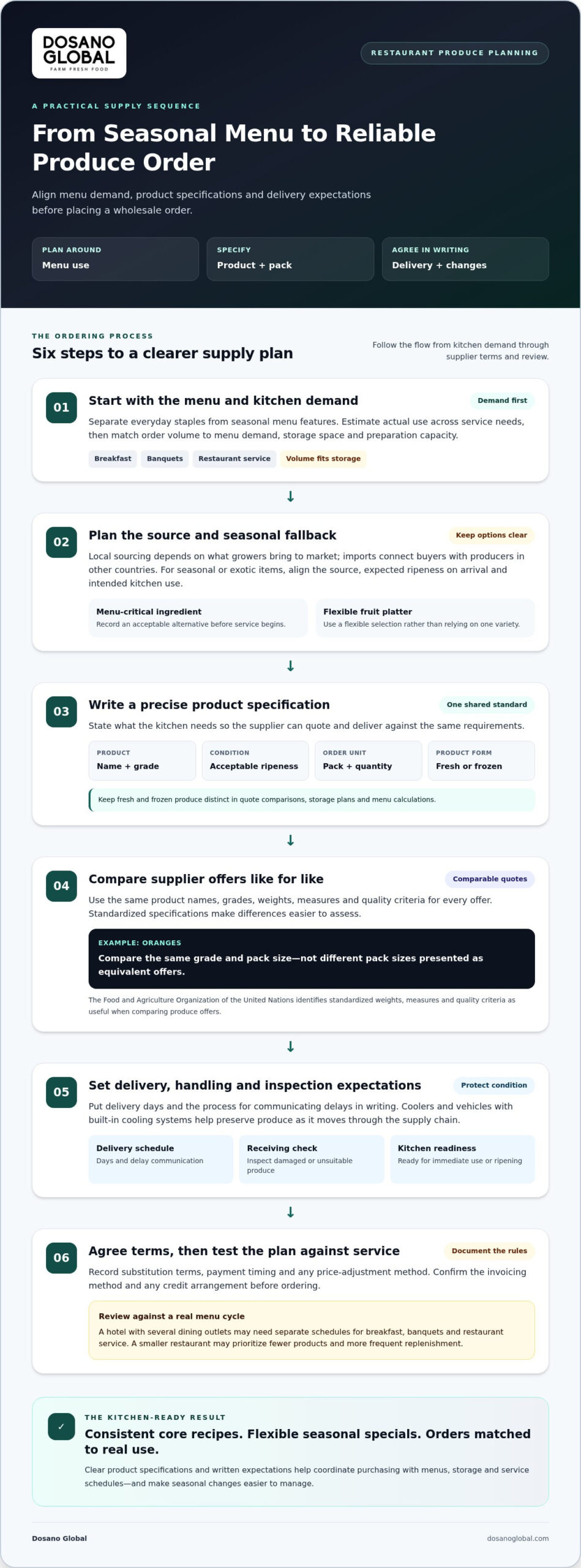
Seasonal planning starts with a product list and a fallback for each menu-critical ingredient. A fruit platter, for example, can use a flexible selection rather than depend on one variety. Agree how changes to product, grade or pack format will be communicated, and document acceptable substitutions before service begins.
Bulk buying can help businesses manage expenses, but order size should reflect actual kitchen use. A restaurant serving fruit at breakfast may use a different volume from one featuring it only in desserts. Compare expected consumption with available storage and preparation capacity before consolidating orders.
Wholesale distribution connects sourcing with the restaurant’s ordering cycle. Make the process clearer by setting product specifications and delivery expectations in writing. Useful details include:
- Produce name, grade, and acceptable ripeness for kitchen use.
- Pack unit and the quantity required for each order.
- Delivery days and the process for communicating delays.
- Substitution rules for seasonal or exotic items.
- Inspection steps for damaged or unsuitable produce.
These details help restaurant owners and hotel chefs coordinate purchasing with menus, storage and service schedules. Seasonal specials can remain flexible, while core recipes rely on consistent product specifications. For example, state whether fruit should arrive ready for immediate preparation or firm enough to ripen before use.
Before signing a fruit supply contract in the UAE, record product specifications, order quantities, delivery schedules, substitution terms and procedures for handling unsuitable produce. Set payment timing and any price-adjustment method in writing so seasonal changes follow a clear process instead of creating confusion during ordering.
Review the arrangement against a real menu cycle before committing. A hotel with several dining outlets may need separate order schedules for breakfast, banquets and restaurant service. A smaller restaurant may prioritize fewer products and more frequent replenishment. In either case, clear expectations make seasonal and internationally sourced produce easier to plan.
Supply-chain and delivery logistics
Fresh produce logistics connect international sourcing, temperature-conscious handling and restaurant receiving routines. Dubai wholesalers use coolers to help prevent spoilage and vehicles equipped with built-in cooling systems to preserve imported products. For a restaurant, the useful measure is whether the delivery process fits the produce’s condition, menu schedule and available storage.
Receiving plans matter. A kitchen expecting lemons for drinks and leafy ingredients for lunch service needs staff ready to inspect, sort and store each delivery. Set a receiving window, assign a team member and keep the order record available. This makes it easier to compare delivered quantities and condition with the purchase specification.
Careful handling supports quality during transit, but produce still needs suitable storage after arrival. Separate items by preparation schedule and storage requirements, and rotate stock so older deliveries are used first. Make fruit intended for immediate service easy for staff to identify, while scheduling firmer produce for later preparation.
A climate-controlled delivery fleet helps limit exposure to outside conditions during transport. Restaurant buyers can set handling expectations in order documents, such as protecting chilled items and noting damaged packs at receipt. Clear records connect any delivery issue to a specific product, order and receiving time.
Delivery planning also depends on the destination and order pattern. A restaurant in central Dubai may need a different receiving window from a kitchen serving a hotel outside the city centre. Grouping items into planned orders can simplify checks, while frequent smaller orders may suit limited storage better. The right balance depends on menu use and kitchen capacity.
Free-delivery thresholds are commercial terms, not a universal UAE standard. They can depend on order value, destination, delivery frequency and route costs. Compare the threshold with the restaurant’s usual basket and ordering cycle. A larger order may meet a threshold but create storage pressure or excess stock, so assess overall operational fit rather than delivery terms alone.
Before setting a routine, map the process from order placement to storage:
- Group products by required condition and kitchen use.
- Set a receiving time that allows staff to inspect the order.
- Record quantities, pack condition and any substitutions.
- Move produce into appropriate storage promptly.
- Review order size against actual menu consumption.
These steps make delivery performance visible through records rather than vague claims. A restaurant can track missing items, damaged packs and timing against its own receiving records. Combined with clear product specifications, those records help purchasing teams refine order frequency and delivery windows as menus change.
Dubai fruit and vegetable wholesalers
Dubai’s wholesale market includes importers and wholesalers serving commercial buyers of fruits and vegetables. A directory lists 45 fruit and vegetable importer and wholesaler results in Dubai, with 20 results on its first page. This gives restaurant purchasing teams a broad market to assess, rather than a single sourcing route. The figures describe directory listings, not a ranking of supplier quality.
Wholesalers connect restaurant buyers with produce from local and international producers. This matters for menus using familiar imports such as apples, oranges, grapes, lemons, potatoes or onions. Start by grouping requirements into regular staples and menu-specific items, then compare suppliers against each group’s product needs and ordering pattern.
Wholesale options in Dubai include businesses that import produce and supply commercial customers. Sourcing relationships, product ranges and handling arrangements vary. When comparing suppliers, check whether the assortment matches your purchasing list, product specifications are clear, and delivery arrangements suit your receiving routine.
Review offers systematically instead of judging by headline price alone. For each product, record the name, pack unit, weight, grade and quality criteria. The Food and Agriculture Organization of the United Nations identifies standardized weights, measures and quality criteria as useful for comparing produce offers. Use the same format to compare apples from different suppliers.
Importers and wholesalers in Dubai comply with local rules and regulations for importing produce. Keep invoices, order details and product descriptions together to make procurement records easier to manage. For example, record lemons and ginger as separate items so you can reconcile what was ordered with what arrived.
Before choosing a wholesaler, assess the practical fit with your restaurant’s purchasing routine:
- Product range: Compare the offered fruits and vegetables with the menu and regular stock list.
- Specifications: Align product names, pack units, weights and quality criteria.
- Handling: Understand how coolers and cooled vehicles support produce preservation.
- Ordering: Match order schedules and quantities to kitchen use and storage capacity.
- Records: Keep product descriptions and order documents consistent for receiving checks.
A directory result is a starting point, not a substitute for evaluating the supply arrangement. Restaurant buyers can narrow the 45 listings by comparing relevant product categories, then assess each candidate’s fit using the same purchasing checklist. This approach helps distinguish a wholesaler suited to routine produce orders from one better aligned with a narrower menu requirement.
For restaurants operating across Dubai and other UAE locations, consistent product descriptions help teams compare orders across kitchens. A central purchasing list can specify items such as grapes, carrots and onions, while each location records quantities separately. Clear records make purchasing decisions easier to review as menus and demand change.
Do UAE fruit suppliers offer delivery to restaurants, and what are the minimum order quantities?
Yes, fruit wholesalers serving UAE restaurants use delivery vehicles to move produce to commercial kitchens. In Dubai, wholesalers use vehicles equipped with built-in cooling systems to help preserve imported products. Delivery planning should connect the order, receiving time and kitchen storage plan.
There is no single minimum order quantity for every fruit supplier in the UAE. Minimums are commercial terms shaped by product pack sizes, order volume, delivery route and handling processes. A case of apples and a mixed order of several fruits may have different minimums because their pack formats differ.
Plan around these terms by listing regularly used products and estimating kitchen consumption for each ordering cycle. A hotel serving fruit at breakfast may need a different order mix from a café using fruit mainly in drinks. Matching quantities to menu demand helps avoid excess stock and makes storage needs easier to manage.
Make the order unit clear in the quotation or order record. It may be a case, carton, box or another stated pack format. Compare the same unit across products and suppliers, and note the expected quantity for each item. Record apples and lemons as separate lines, for example, rather than treating a mixed fruit order as one unspecified quantity.
Delivery timing also affects practical order size. A kitchen with limited cold storage may prefer smaller, more frequent deliveries, while a larger operation may plan consolidated orders. The right arrangement balances stock needs with the receiving team’s capacity, menu schedule and available storage.
Set a simple receiving routine for every delivery. Assign a staff member to compare the order record with delivered items, inspect pack condition and move produce into suitable storage. If a delivery includes grapes for immediate service and firmer fruit for later use, separate them according to preparation timing.
Before setting regular order quantities, map these details:
- Product names and the pack unit used for each item.
- Minimum quantity for individual products and mixed orders.
- Delivery days, receiving windows and destination details.
- Available storage and expected use before the next delivery.
- How substitutions and unsuitable produce are recorded.
Treat minimum quantities as part of purchasing design, not as a number viewed in isolation. Group frequently used fruit into routine orders and handle menu-specific items separately. For example, maintain a steady plan for apples while scheduling a seasonal fruit according to its menu role and storage capacity. Written order terms help purchasing and kitchen teams work from the same quantities and delivery expectations.
Dosano Global: Meat
Dosano Global supplies fresh fruits, vegetables and chillis to commercial buyers in the UAE. Its produce supply can support restaurant purchasing plans for these ingredients. Set out product requirements and order quantities to align sourcing with your menu and kitchen needs.
If you are reviewing suppliers, start by outlining the fruits, vegetables or chillis required and their intended use. This gives the purchasing discussion a clear focus, whether you are planning menu staples or ingredients for specific dishes.
To discuss produce sourcing for your restaurant, contact Dosano Global.
Turn purchasing priorities into a clear supply plan
Turn kitchen priorities into a practical purchasing brief. Identify which ingredients anchor the menu, which change with seasonal dishes, and what ripeness suits each preparation. Include preferred pack formats, receiving windows and how the team records substitutions. A clear brief gives purchasing and kitchen staff a shared reference as menus evolve, helping each order support service and avoid unnecessary stock pressure.
Choosing wholesale fruit suppliers for restaurants in the UAE is part of building a sound purchasing plan. Keep the conversation focused on the fruits your menu needs and how they fit your ordering routine. Dosano Global supplies fruits, chillis and meat to commercial buyers. Its range can support restaurants sourcing produce alongside other listed food categories, with requirements shaped around their purchasing needs.
Set your priorities, then take the next step with a focused supply discussion. Contact Dosano Global about supply and move your restaurant’s sourcing plan forward with confidence.
Frequently Asked Questions
Which wholesale fruit suppliers serve restaurants in the UAE?
Dosano Global supplies fresh fruits to commercial buyers across the UAE. Restaurants comparing wholesale fruit suppliers for restaurants in the UAE can consider its fruit range, sourced from Kenya, Uganda and Tanzania. Varieties include avocados, mangoes, pineapples, passion fruit, bananas, pawpaw, guavas and dragon fruit. Share your intended menu use and purchasing requirements to focus the discussion on your kitchen.
What fresh fruits do UAE restaurant wholesalers supply?
UAE restaurant wholesalers supply a range of imported fruits, with available varieties depending on the supplier and sourcing season. Dosano Global’s range includes avocados, mangoes, pineapples, passion fruit, bananas, pawpaw, guavas and dragon fruit. Its fruits are picked ripe and export-ready. Match menu uses, such as mangoes for desserts or avocados for savoury dishes, to preparation needs and preferred ripeness.
Which UAE fruit wholesalers offer the best quality, reliability, and pricing?
There is no single best wholesaler for every restaurant because menus and purchasing needs differ. Compare offers by product origin, fruit condition, pack details and fit with your intended use. Dosano Global sources fruits from Kenya, Uganda and Tanzania, and its fruit is picked ripe and export-ready. Request a quote based on your product selection and order requirements.
How do UAE fruit wholesalers handle imported fruit, local produce, and seasonal availability?
Imported fruit availability follows harvest and sourcing cycles in its country of origin, while local produce depends on local growing seasons. Plan menus by identifying which dishes rely on a specific fruit and which can use a seasonal alternative. Dosano Global sources fruit from Kenya, Uganda and Tanzania. Its range includes mangoes, pineapples, guavas and dragon fruit, offering distinct options for menu planning.
What payment terms and account options do UAE restaurant fruit suppliers offer?
Agree on payment timing, invoicing method and any credit arrangement before ordering. Order frequency and volume can help shape a practical account structure.