
 English
Wholesale Vegetable Supplier UAE: A Buyer’s Checklist for 2026
What should you look for in a wholesale vegetable supplier UAE businesses can work with? A broad product range is only useful when the produce,...

What should you look for in a wholesale vegetable supplier UAE businesses can work with? A broad product range is only useful when the produce, quality standards, and supply arrangements fit your operation. Unclear specifications or inconsistent expectations can disrupt preparation, display, and purchasing plans. A dependable commercial relationship starts with a clear brief and shared expectations.
This checklist explains how to compare suppliers, define the vegetables and standards your business needs, and assess whether a supply arrangement fits your requirements. It covers sourcing, quality controls, communication, and supply planning, with practical criteria you can use to compare responses. Dosano Global supplies fresh farm vegetables to commercial clients across the UAE through cross-border procurement and quality controls. Use the guidance below to prepare a clear brief and start a focused supply discussion.
Key Takeaways
- Compare a wholesale vegetable supplier UAE by fit with your business requirements, not by product range alone.
- Use the same buyer-defined criteria to assess sourcing, produce selection, quality controls, and handling.
- List the vegetables and specifications your operation needs to make supplier comparisons practical.
- Prepare a supply brief with product details, expected order patterns, and receiving requirements.
- Dosano Global uses cross-border procurement and quality controls to supply fresh farm vegetables to commercial clients across the UAE.
Why UAE Businesses Need the Right Wholesale Vegetable Supplier
Vegetable quality and supply fit affect daily operations. A batch that does not match the agreed specification can disrupt preparation, display, or planned menus. A supply arrangement that ignores your purchasing pattern can create similar pressure, whether you order frequently in smaller quantities or plan larger, less frequent purchases.
Range alone is not enough to compare suppliers. A broad catalogue does not tell you whether the produce suits your intended use, whether quality expectations are specific, or whether communication fits your ordering routine. The right wholesale vegetable supplier UAE businesses choose is one whose products, standards, and supply arrangements align with the buyer’s stated requirements.
The UAE’s agricultural context also informs commercial sourcing decisions. The overview of Agriculture in the United Arab Emirates provides background on local agriculture and its development. For buyers, the practical priority is to define what the business needs and compare each supply arrangement against that brief, rather than relying on general claims about selection or quality.
Which UAE businesses buy vegetables wholesale?
Food-service businesses, retailers, caterers, and other commercial operations buy vegetables for different purposes. A kitchen may specify vegetables by how they will be prepared, while a retailer may focus on presentation and suitability for sale. Purchasing frequency, expected volume, and intended use all shape the details buyers should share.
Commercial procurement differs from household grocery shopping. Buyers need to consider how produce requirements fit ongoing operations, receiving processes, and planned use. Setting out those needs helps keep supplier discussions focused on details that affect the business.
What does a dependable supply relationship need?
Dependability starts with shared expectations. Describe each vegetable by name and by the characteristics that matter to your use, such as size range, maturity, or acceptable condition. Outline your expected order pattern and receiving requirements, too. Clear communication about requirements, availability, and changes helps both sides work from the same information.
Terms such as “fresh” or “premium quality” can start a conversation, but they are not precise standards on their own. Translate them into observable requirements your team can apply when receiving produce. For example, specify the condition, sizing, or presentation your operation needs instead of relying on a general quality label.
Supplier fit is the match between a buyer’s operating requirements and clearly defined produce standards. Assess the relationship as a whole: what you need, how you describe it, and whether the supply arrangement suits your business. The following checklist helps commercial buyers across the UAE turn broad supplier claims into a practical comparison.
Wholesale Vegetable Supplier UAE Checklist: Compare Sourcing and Quality
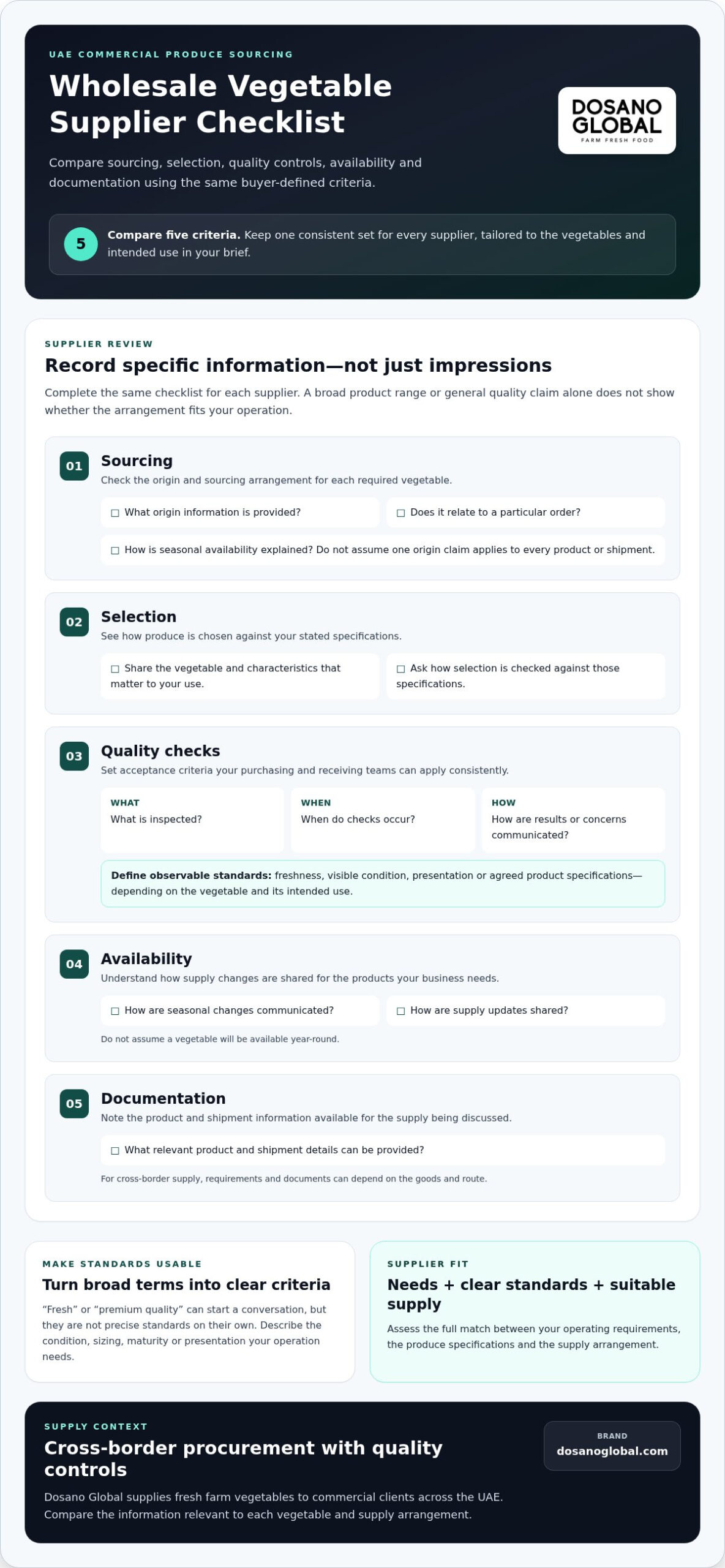
A useful comparison starts with one consistent set of criteria. Claims about freshness or selection are difficult to assess unless you know what they mean for the vegetables your business buys. Use the same buyer-defined standards in each supplier discussion and record specific information, not just impressions. This helps distinguish clear sourcing and quality processes from general promotional language.
Use a simple table and complete one column for each supplier. Tailor the criteria to your produce brief, since the relevant details can vary by vegetable and intended use.
| Criterion | What to record |
|---|---|
| Sourcing | Available origin information and the sourcing arrangement for each required vegetable |
| Selection | How produce is selected against your stated specifications |
| Quality checks | What is inspected, when checks occur, and how results or concerns are communicated |
| Availability | How seasonal changes or supply updates are shared for the products you need |
| Documentation | Relevant product and shipment information available for the supply being discussed |
How to assess vegetable sourcing claims
Compare sourcing arrangements product by product. Note what origin information is provided, whether it relates to a particular order, and how seasonal availability is explained. Do not assume a vegetable will be available year-round or that a stated origin applies to every shipment. For cross-border supply, requirements and documents can depend on the goods and route. The U.S. Trade Administration’s UAE Import Requirements for Food Products offers a reference point for import documentation.
Dosano Global uses cross-border procurement to supply fresh farm vegetables to commercial clients across the UAE. Keep your comparison focused on information relevant to the vegetables and supply being discussed, rather than assuming one origin claim covers every product.
What quality controls should buyers compare?
Set acceptance criteria your purchasing and receiving teams can apply consistently. Depending on the vegetable and its intended use, these may describe freshness, visible condition, presentation, or agreed product specifications. Identify the characteristics that matter most, then compare how each supplier’s selection and quality checks relate to them. Dosano Global applies quality controls to commercial produce supply, with buyer specifications providing a practical basis for clear expectations.
Codex Alimentarius and GlobalG.A.P. can serve as references for food standards and agricultural practices. Mentioning either does not establish that a supplier holds a particular certification. Treat claims about origin, grade, and certification as specific statements that require documentation for the supply being evaluated.
A quality claim describes an intention; a quality check identifies what is assessed and how it is judged. Use that distinction to make your comparison more useful. Commercial buyers can include Dosano Global’s vegetable supply in their assessment.
Compare UAE Vegetable Suppliers on Product Fit and Supply Capability
A supplier’s range matters when it matches what your business buys and can receive. Compare each supplier against the same buyer brief: the vegetables required, relevant specifications, and how orders fit your operating routine. This is more useful than simply counting catalogue categories.
Organize your “wholesale vegetable supplier UAE” comparison around two levels: essential requirements the arrangement must meet, and desirable capabilities that add value but are not deal-breakers. Keeping the categories separate prevents an attractive extra from outweighing a gap in a core requirement.
Does the supplier’s vegetable range fit your business?
List each required vegetable alongside its intended use and relevant specification. A kitchen buying tomatoes for a particular preparation may have different requirements from a retailer selecting produce for display. Separate regular needs from seasonal or occasional purchases, then record how clearly availability and proposed substitutions are explained.
- Essential: Required vegetable types, specifications, and suitability for the stated commercial use.
- Essential: Clear communication about availability, order requirements, and how changes are handled.
- Desirable: Options that support seasonal or occasional purchasing without complicating core orders.
Be specific about what “suitable” means for your operation. Note size, condition, or presentation expectations where they affect preparation, sales, or other business use. If a substitute is proposed, assess whether it meets the same purpose and standards instead of treating all alternatives as interchangeable. Record the explanation so your supplier comparisons remain consistent.
Can the supply arrangement fit your operating needs?
Describe your expected order pattern, including how often you purchase and how requirements may vary. Add receiving constraints, such as the times your team can accept goods, available unloading space, or internal checks at receipt. These details help you compare supply arrangements with your actual operations.
Assess how clearly the supplier communicates when availability or order details change. Useful communication gives your team relevant information, such as which item is affected and what options are proposed. Compare clarity and relevance rather than relying on promises of uninterrupted supply.
A compact scorecard can use three ratings: meets essential need, needs clarification, or desirable advantage. Apply them to each requirement and note the evidence behind each rating. For example, record whether a specification is clear, whether a proposed substitution is explained, and whether receiving arrangements fit your process. Do not give a high score to a broad claim without practical detail.
Supply fit depends on both the produce a business needs and the way its operations can order, receive, and use it. This helps buyers identify an arrangement suited to their business instead of assuming that one supplier’s range or general service description fits every commercial buyer.
A UAE Buyer’s Checklist for Preparing a Vegetable Supply Brief
A clear supply brief gives each supplier the same starting point. It explains what your business needs and gives your team a practical basis for comparing responses. Before discussing requirements with a wholesale vegetable supplier UAE businesses are considering, prepare the details below and mark which are essential.
What information belongs in a vegetable procurement brief?
- Name each vegetable. List the products your business intends to purchase, separating regular requirements from seasonal or occasional needs.
- Describe the specification. Note the characteristics that matter to your use, such as size, condition, presentation, or other agreed product standards. Make each requirement clear enough for your team to assess on receipt.
- Explain intended use. State whether the produce is for food service, retail, catering, or another commercial purpose. The use helps clarify which characteristics matter.
- Set out expected order patterns. Describe the quantities your business anticipates and how often it expects to order. Treat these as buyer requirements for discussion, not supplier commitments.
- Outline receiving requirements. Include relevant receiving times, site procedures, and practical constraints that could affect acceptance of an order.
- State communication and quality expectations. Identify preferred communication channels and the information you need if availability, specifications, or proposed substitutions change.
Keep the brief practical. Instead of writing only “good quality,” describe the observable condition or presentation your operation expects. Separate firm requirements from preferences, and flag details that need discussion. This helps a supplier assess the request accurately and respond to the scope your team intends to purchase.
How should buyers compare supplier responses?
Send the same brief to each supplier and record the response against every item. Mark what is clearly addressed, what remains open, and any difference from your original requirement. If a response proposes an alternative vegetable or specification, note it separately rather than treating it as an automatic match. This keeps comparisons focused on practical fit, not the length or confidence of a sales description.
A well-prepared brief also gives your internal team a shared reference. Purchasing staff can document requirements, while receiving staff can check product details against agreed expectations. Keep a copy of the final version so later discussions refer to the same terms and agreed changes can be recorded clearly.
For broader context on product sourcing, consult a fresh produce sourcing guide alongside your business-specific brief. Then use your completed checklist to start a commercial discussion with Dosano Global about fresh farm vegetable supply across the UAE. Discuss your vegetable supply brief and bring your product requirements, order pattern, and receiving needs to the conversation.
Work with Dosano Global for Wholesale Vegetable Supply Across the UAE
Once your buyer brief is ready, discuss how its requirements align with a commercial supply arrangement. Dosano Global sources and supplies fresh farm vegetables to commercial clients across the UAE, using cross-border procurement and quality controls as part of its supply approach. For businesses evaluating a wholesale vegetable supplier UAE buyers can work with, the brief keeps the discussion grounded in products, specifications, and operating needs.
How Dosano Global supports commercial vegetable buyers
Dosano Global supplies fresh farm vegetables to commercial buyers. Cross-border procurement supports the supply process, and quality controls are part of its commercial produce supply. These capabilities provide a starting point for discussing the vegetables your business requires and the standards that matter to your operation.
A clear brief connects those capabilities to your purchasing needs. It lets both sides focus on the requested vegetables, intended use, and supply expectations instead of treating a general product range as proof of fit. Keep the discussion centered on your commercial requirements and the details relevant to your business.
What to include when starting a supply discussion
Bring the key points from your completed brief so the conversation can focus on your requirements. Include:
- Required vegetables: Name each product and separate core needs from occasional or seasonal requirements.
- Specifications: Describe the product characteristics and quality expectations that matter for your intended use.
- Order pattern: Outline the quantities and purchasing frequency your business anticipates as planning information for discussion.
- Receiving needs: Summarize relevant receiving arrangements or constraints at your business.
- Communication preferences: Explain how your team prefers to discuss requirements and receive information about changes.
These details make the conversation specific without treating every requirement as a fixed supply commitment. If a point is flexible, say so. If it is essential, identify it clearly. This gives the discussion structure and keeps attention on the fit between your produce needs and business operations.
A strong commercial relationship begins with clear requirements and direct communication. Dosano Global’s fresh vegetable sourcing, cross-border procurement, and quality controls provide a basis for discussing supply with businesses across the UAE. Share your product brief and discuss your vegetable supply requirements with Dosano Global to start a focused commercial conversation.
Turn Your Supply Brief into a Confident Next Step
Your vegetable supply brief can support more than an initial comparison. Keep it as a working reference for purchasing and receiving teams, and revisit it as menus, customer demand, or business operations change. Then updated requirements have a clear starting point, and future supplier discussions can focus on what has changed instead of rebuilding the request.
Choosing a wholesale vegetable supplier UAE businesses can rely on starts with a clear commercial conversation about fit. Set out your priorities, distinguish essential specifications from preferences, and discuss how supply expectations align with your operation. A well-defined brief helps both sides approach that conversation with purpose.
Dosano Global welcomes commercial discussions about vegetable supply requirements. Discuss your wholesale vegetable supply requirements with Dosano Global and take the next step toward a supply relationship shaped around your business needs.
Frequently Asked Questions
How do I choose a wholesale vegetable supplier in the UAE?
Choose a wholesale vegetable supplier UAE businesses can work with by checking how its offer fits your purchasing needs. Compare written responses against the same product specifications, order pattern, and receiving requirements. Consider whether product details are easy for your procurement team to track, and decide how your team will record recurring issues or changed requirements once purchasing begins.
What should a UAE business include in a vegetable supply request?
Include the products and characteristics your team needs to identify when ordering and receiving. For example, state whether a vegetable is intended for kitchen preparation or retail sale, since that may affect the required condition or presentation. Identify who in your business can approve changes to the request to avoid conflicting instructions during supplier discussions.
How can I assess the quality of wholesale vegetables?
Assess quality against criteria your staff can apply consistently when produce arrives. Define the acceptable condition for its intended use and identify who records any mismatch between the agreed specification and the goods received. Keep notes by product and order to make patterns easier to spot. Supplier quality statements provide context, but they do not replace clear, observable acceptance criteria for your business.
Can a wholesale vegetable supplier meet changing business requirements?
A supply discussion can account for changing needs, but distinguish a request from an agreed change. If a menu change or customer demand affects an order, state which product, quantity, or timing has changed and when the revised need applies. Record the response and any agreed adjustment so an informal update is not mistaken for a standing arrangement for future orders.
What is the difference between a vegetable supplier and a vegetable exporter?
A vegetable supplier provides produce to a buyer; an exporter participates in moving goods across national borders. These roles can overlap, so focus on the arrangement your business needs rather than the label alone. Dosano Global sources and supplies farm vegetables for commercial clients across the UAE through cross-border procurement. Buyers can frame discussions around the products, supply details, and documentation relevant to their purchase.
How can I compare wholesale vegetable suppliers fairly?
Compare equivalent requirements, not unlike proposals. If a response uses different units, product descriptions, or assumptions about order quantities, clarify those differences in your notes before deciding. Record which points are essential and which are preferences, then assess each category separately. This makes trade-offs visible and helps your team explain its decision to colleagues who approve or receive the purchases.
Does a wholesale vegetable supplier in the UAE provide certified organic produce?
Dosano Global does not supply certified organic products. More generally, organic status should be established through product-specific documentation, not inferred from terms such as fresh, farm-sourced, or high quality. Keep organic certification separate from general quality controls, since checks on produce condition do not by themselves establish certification.