
 Arabic

How to Reduce Food Waste in UAE Commercial Kitchens
A kitchen can’t control what it doesn’t measure. To understand how to reduce food waste in commercial kitchens in the UAE, track every discard for...

A kitchen can’t control what it doesn’t measure. To understand how to reduce food waste in commercial kitchens in the UAE, track every discard for two weeks, then use the results to improve purchasing, stock rotation, recipes and portion sizes. This baseline shows which ingredients, preparation steps or menu items generate the most waste.
Waste does not begin only at the end of service. Over-ordering, poor stock rotation, inconsistent preparation and oversized portions can all contribute. This guide explains how to identify those patterns and build practical routines: use first in, first out inventory management, plan purchasing around actual use, share ingredients across menu items, standardise recipes and portions, and review waste records to see what works. The goal is to use ingredients better while keeping service consistent.
Key Takeaways
- Record discarded ingredients and the reason for each loss to reveal where kitchen routines need attention.
- Match purchasing to actual menu demand and rotate stock so usable ingredients are less likely to expire unused.
- Use ingredients across several menu items and plan a concise menu to make stock easier to manage.
- Set clear recipe methods and portion standards, then use customer leftovers to spot dishes or servings that may need adjustment.
1. 🏪 Managing Valuable Kitchen Inventory?
First in, first out (FIFO) means using older stock before newer deliveries. Place newly received ingredients behind stock already on the shelf so staff can reach the earlier batch first. For example, move yesterday’s unopened vegetables forward before storing today’s delivery. This makes stock easier to see and less likely to be forgotten at the back. In a busy UAE kitchen, use the same routine in chillers, dry stores and preparation areas.
Pair FIFO with clear date labels. When staff receive or open a product, mark it with a legible date and product name, then keep the label visible during storage. If food is transferred to another container, transfer its identification too. During each shift handover, staff can quickly identify which batch to use first. Labels support stock rotation, but they don’t make expired or deteriorated ingredients suitable for use. Remove anything unsuitable for the kitchen.
Organise shelves so rotation works during service, not just during a quiet stocktake. Keep similar ingredients together, face labels outward and avoid placing new deliveries in front of older stock. A cook reaching for tomatoes should see the earlier batch immediately. Store items in their assigned areas and return them after preparation instead of leaving them among unrelated supplies. Clear shelf zones reduce mix-ups and make excess stock easier to spot.
Order according to menu demand and recent usage, not habit. Compare purchase records with actual ingredient use, then adjust quantities when demand changes. A menu featuring several dishes with the same vegetables needs a different stock plan from one using a small amount for a single special. Factor in delivery schedules and available storage space when setting order quantities. Buying only what the kitchen can use helps prevent surplus from being discarded.
Build a regular stock review into the kitchen schedule. Review seafood and dairy stocks twice weekly to spot excess orders and slow-moving items. Record the quantity on hand, incoming stock and what remains after service. If the same product repeatedly carries over, reduce the next order or reconsider how the menu uses it. Comparing counts across weeks helps distinguish a one-off change from a continuing pattern and turns stock control into a practical purchasing decision.
When receiving a delivery, compare it with the order and inspect the ingredients before putting them away. Set aside items that need attention, then place acceptable stock behind older batches. Damaged goods can become waste before reaching a dish, while poor rotation can leave fresh produce unused. Use vegetable trimmings in suitable stocks or broths when kitchen procedures allow. Preventing avoidable discards supports ingredient value and environmental goals while helping maintain consistent portions.
2. How to Minimize Food Waste in Professional Kitchens?
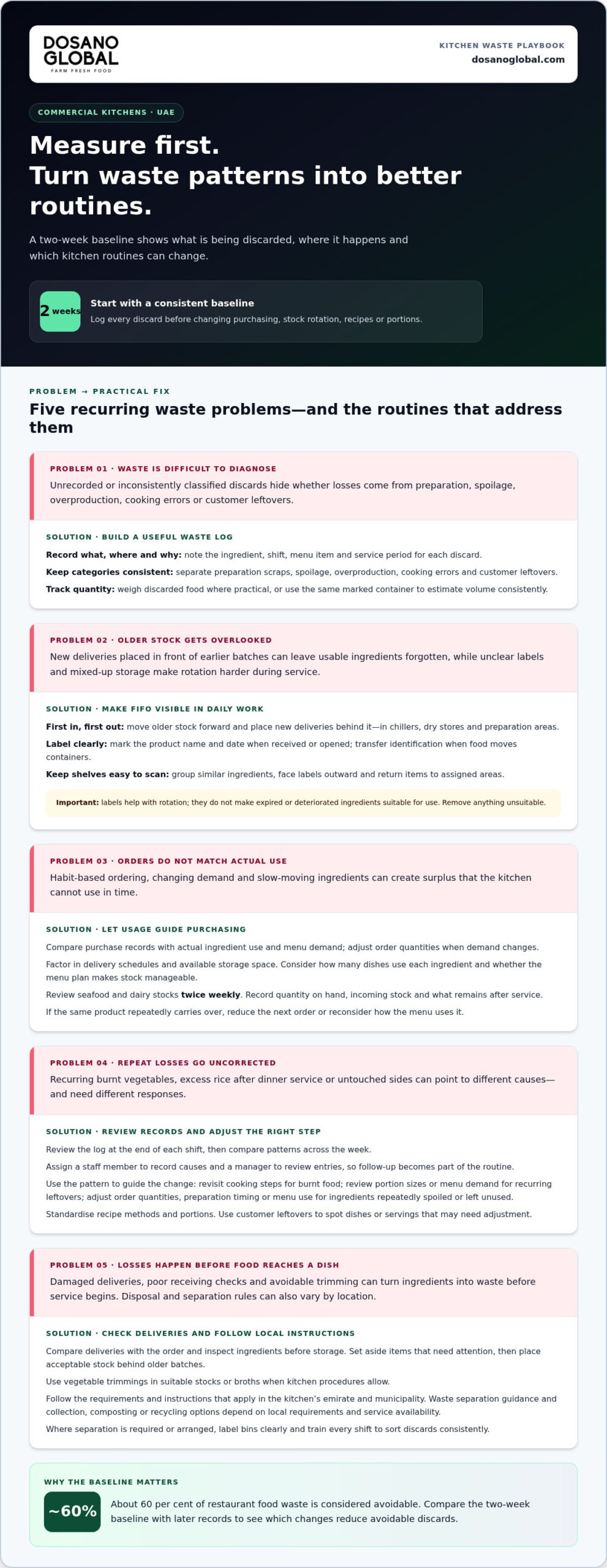
A practical plan for how to reduce food waste in commercial kitchens across the UAE starts with a two-week baseline. Record what is discarded, where it came from and why it could not be used. Separate preparation scraps, spoilage, overproduction, cooking errors and customer leftovers. Keep categories consistent throughout the tracking period so the kitchen can compare results and identify its main sources of waste.
Track quantities as well as causes. Weigh discarded food where practical, or use the same marked container to estimate volume consistently. Note each ingredient, shift, menu item and service period. Repeated excess rice after dinner service, for example, points to a different issue from bruised fruit discarded during preparation. Consistent records reveal which losses have the greatest effect on kitchen operations.
Review the log at the end of each shift, then compare patterns across the week. Frequent burnt vegetables suggest a cooking step to review; recurring untouched sides may mean portion sizes or menu demand need attention. Assign a staff member to record each cause and a manager to review the entries. This makes follow-up part of the routine instead of an occasional stockroom exercise.
Identify high-risk ingredients by comparing waste records with purchasing and usage. Seafood, dairy, leafy vegetables and prepared items can become hotspots when orders exceed demand or menu plans change. Look for ingredients that are repeatedly spoiled, left unused or trimmed beyond what recipes require. Adjust order quantities, preparation timing or menu use in response to recurring patterns.
For food waste disposal and recycling, UAE kitchens should follow the requirements and instructions that apply in their emirate and municipality. Keep waste streams identifiable and follow local directions for disposal and separation instead of assuming one approach applies nationwide.
Municipal guidance on separating food scraps from general waste may vary by location. Where separation is required or arranged, label bins clearly and train every shift to sort discards consistently.
Food-waste collection, composting and recycling options depend on local service availability. Costs vary with waste type, volume, collection frequency and service scope; providers share pricing after a quote request.
Reducing excess food waste can lower spending on ingredients that never reach customers, while demand-based purchasing can reduce unnecessary resource use. To assess how to reduce food waste in commercial kitchens across the UAE, compare the baseline with later records and track which changes cut avoidable discards. The results give the kitchen a practical basis for improving purchasing and waste management.
3. What is Food Waste in the Food and Beverage Industry?
Food waste includes ingredients discarded during receiving, storage, preparation, cooking, and service. Common causes include over-ordering, spoilage, damaged deliveries, trimming, cooking errors, and unsold dishes. About 60 per cent of restaurant food waste is considered avoidable. A kitchen can identify its main causes by recording discarded items and matching them to the stage where they became unusable.
Over-ordering often starts when purchasing follows habit instead of current demand. Before placing an order, compare delivery quantities with menu plans, covers and previous usage. If a vegetable appears on one low-demand special, ordering the usual bulk amount may leave excess stock unused. A concise menu that shares ingredients across dishes can improve purchasing accuracy and reduce spoilage.
Storage practices matter in the UAE’s hot conditions because perishable ingredients need appropriate refrigeration. Maintain the cold chain, move chilled goods into suitable storage promptly, and monitor equipment temperatures rather than relying on appearance. Keep refrigerators no more than 80 per cent full to support airflow. Store raw meat, poultry, and seafood on the lowest shelves, below ready-to-eat ingredients, to reduce the risk of drips contaminating other food.
Temperature records help staff detect refrigeration problems before stock is lost. Automated temperature monitoring can alert staff to deviations and provide HACCP compliance records. Perishable goods should not be held in the 5–65 °C danger zone, where bacteria grow quickest. Keep leftover food at 5 degrees or below, and reheat it only once. Follow safe handling procedures and discard food that has become unsuitable for use.
Food-waste technologies address different causes, so compare them by the problem they solve. Scales and waste logs reveal which ingredients or processes create the most discards; temperature monitors flag storage deviations; vacuum sealing can extend food shelf life by 3–5 times. These tools aren’t interchangeable: measurement identifies loss patterns, monitoring supports cold storage, and sealing helps preserve suitable ingredients.
Prevent spoilage by combining demand-based purchasing with FIFO rotation, clear date labels, prompt refrigeration and routine temperature checks. In hot conditions, avoid leaving chilled deliveries or prepared ingredients at room temperature during busy receiving or service periods. Compare vegetable stock with actual menu use, and adjust orders when repeated leftovers show demand is lower than expected. These practical steps reduce waste while protecting food quality and kitchen operations.
4. Standardised recipes and portion control
A standardised recipe gives every cook the same ingredient quantities, preparation steps, cooking method and yield. Record the serving size alongside each recipe and keep the method accessible at the workstation. For example, specify the weight of cooked rice and vegetables for one plate instead of relying on a visual estimate. Consistent methods across shifts make ingredient use more predictable and help identify avoidable waste during preparation or cooking.
Use digital scales, portion scoops or marked ladles to serve the recipe’s intended amount. Weigh a sample portion during service and compare it with the standard. If one shift regularly serves larger portions, the same ingredients produce fewer plates and purchasing plans become less reliable. Train staff to measure components before plating, especially high-volume sides such as rice, salad or vegetables.
Customer plate-waste analysis shows whether portions match diners’ appetites. During a waste audit, record which dish was returned and which components remained uneaten. Repeated leftovers from a side dish may indicate an oversized portion, while a mostly untouched main course may point to a quality or menu-fit issue. Adjust one portion or recipe at a time, then compare the next audit with the earlier results.
Staff training turns written standards into consistent service practices. Demonstrate a recipe, have team members prepare it and check that the portions match. Explain the reason for each measure: excess ingredients increase preparation waste, while inconsistent cooking can make a dish unservable. Use shift briefings to review recurring errors and ensure new staff follow the same portioning method.
Temperature control supports food safety while recipes move from preparation to service. Keep leftover food at 5 degrees or below and reheat it only once. Train staff to label prepared items and follow the kitchen’s safe storage and handling procedures. If an ingredient has been held improperly or appears unsuitable, don’t use it to complete a standard portion; recipe consistency never takes priority over safe food handling.
In the UAE, surplus food should only be donated or reused if it remains safe to eat and has been handled and stored appropriately. Separate suitable surplus from food waste, maintain its storage conditions and coordinate a safe handover with the recipient organisation. A clear procedure helps staff distinguish reusable food from items that must be discarded.
For practical improvements, pair recipe standards with a simple service review. Compare portions prepared with portions sold, then record leftovers and plate returns. If demand changes, update the preparation plan instead of allowing excess portions to accumulate. These steps help professional kitchens reduce spoilage, protect food safety and make portion control part of daily operations.
5. Measuring and tracking kitchen food waste
Accurate tracking turns waste management from a general concern into a practical operating method. Categorise each discard, such as preparation trim, spoilage, overproduction, cooking error or plate waste. Record the ingredient, weight, time and reason. These details show whether losses start during receiving, preparation, cooking or service, so managers can address the relevant process.
Use a consistent system on every shift. Place a labelled container or scale at each disposal point, and record waste before it leaves the kitchen. Keep preparation scraps separate from unsold dishes and customer returns, as each category points to a different cause. Vegetable trimmings may reflect preparation technique, while untouched sides may indicate portions need review.
Pair waste weights with service figures to make comparisons useful. One kitchen that served 100 customers prepared 10 kilograms of steak, sold 9 kilograms, and had 1 kilogram left to throw out. Record both the quantity prepared and discarded, then compare similar service periods. This helps distinguish a demand change from an ongoing forecasting or production issue.
No single waste quantity describes every UAE restaurant or hotel; menu, service volume, purchasing and recording methods all affect the result. Each operation can establish its own baseline by weighing discards and recording covers over a consistent period.
Review records on a set schedule, such as at the end of each week. Sort entries by ingredient, cause and kitchen stage, then identify the largest repeated losses. If cooked rice often remains after dinner service, compare preparation quantities with sales before changing the recipe. Assign a manager to choose a practical adjustment and record when it begins.
Keep the measurement consistent after making a change. Compare like-for-like shifts, service periods or dishes, rather than a busy event with a quiet day. A simple spreadsheet can track date, item, waste category, quantity and action taken. Staff can then see whether the change reduced discards or merely shifted waste to another stage.
Share findings with the people who can act on them. A chef may adjust preparation batches, while the purchasing lead may revise order quantities. Use a short shift briefing to explain the main finding and the next step. Clear responsibility connects waste records to decisions instead of leaving them as unused figures.
Once the kitchen’s data shows which ingredients drive demand, align purchasing with that evidence. Explore fresh produce sourcing as part of a measured ingredient plan.
Dosano Global: Meat
Dosano Global supplies fresh agricultural commodities for commercial buyers in the UAE, including fresh fruits, fresh chillis and fresh vegetables. Once your waste records show which ingredients move consistently and which create excess, use those findings to guide purchasing. Matching ingredient selection to actual menu use helps kitchens plan stock more carefully and make better use of incoming produce. For kitchens reviewing fresh produce needs, Dosano Global provides a wholesale supply partner for these categories. Discuss your commercial requirements with Dosano Global, or visit dosanoglobal.com.
Make Your Next Purchasing Decision Count
The practical answer to how to reduce food waste in commercial kitchens in the UAE is to let measured demand guide purchasing decisions. Use kitchen records to identify which ingredients fit the menu, then prioritise what your team can use well. Review those decisions as menus and customer demand change. Consistent adjustments make waste reduction part of everyday commercial planning, not a one-time exercise.
For commercial buyers aligning ingredient supply with kitchen needs, Dosano Global offers meat, fruits, and chillis. Choose the categories that suit your menu and purchasing requirements, and build your next order around actual kitchen use. Contact Dosano Global to discuss your requirements. A more measured approach starts with one clear decision, and your next purchasing cycle is a practical place to begin.
Frequently Asked Questions
How to Minimize Food Waste in Professional Kitchens?
Minimise waste by matching preparation to expected service and reviewing exceptions after each shift. For a buffet, prepare smaller batches and replenish them as demand becomes clear instead of setting out the full quantity at once. Assign a team member to record surplus and decide which safe ingredients can be used in planned dishes. This connects daily production choices to actual demand without compromising service.
What is Food Waste in the Food and Beverage Industry?
Food waste includes food or ingredients discarded, lost or left unused during purchasing, storage, preparation, cooking or service. It covers edible surplus, such as an untouched prepared dish, as well as inedible material, such as certain scraps. Distinguishing between these types helps kitchens identify ways to prevent waste. Repeated surplus from a service station, for instance, suggests a production-planning issue, while damaged ingredients on receipt may point to a delivery or handling problem.
🏪 Managing Valuable Kitchen Inventory?
Manage inventory by setting a practical par level for each ingredient: the amount the kitchen aims to keep available for planned service. Base it on recent usage, upcoming menu needs and delivery timing. Compare the level with stock on hand before ordering. If a menu change removes a dish, for example, update the par level for its dedicated ingredients instead of carrying the old quantity forward.
What are the most effective ways to reduce food waste in commercial kitchens?
Prioritise prevention over disposal: plan production around demand, keep recipes consistent and review the causes of repeated discards. Choose one recurring loss, such as excess prepared garnish, and change only the relevant preparation step. Tell the team what has changed and observe comparable services. This makes it easier to judge whether the adjustment helped or created another waste issue.
How can commercial kitchens in the UAE measure and track food waste?
Track discarded food by weight and category, then relate the total to the number of customers served. This creates a comparable measure across services with different customer volumes. A manager can compare a weekday lunch with another weekday lunch, for example, rather than judging waste by bin volume alone. Keep weighing and recording methods consistent across shifts so the figures reflect operational changes, not differences in measurement.
How can menu planning, portion control, and food preparation reduce kitchen waste?
Use sales patterns and reservations to plan dishes, then prepare components in batches that can be replenished as service unfolds. A menu matrix can show which ingredients appear in several dishes and which are used for just one. Standardise serving tools to keep portions consistent, and review customer feedback before changing a popular dish. This helps teams adjust production while maintaining a dependable guest experience.
What are the UAE regulations for food waste disposal and recycling by commercial kitchens?
Commercial kitchens should follow their emirate’s and municipality’s food-waste disposal and recycling requirements. Keep waste streams identifiable, and label bins and train staff to separate scraps wherever local guidance requires or arranges it.