
 English
Fresh Meat Procurement Requirements: A Practical 2026 Checklist
A meat order can match a buyer’s expectations and still create friction at delivery if its specification leaves room for interpretation. Clear fresh...

A meat order can match a buyer’s expectations and still create friction at delivery if its specification leaves room for interpretation. Clear fresh meat procurement requirements turn preferences into an agreed supply plan, connecting the requested product with quality checks, documents and delivery arrangements before an order is placed.
Freshness matters, but it does not define an acceptable delivery on its own. Buyers and suppliers also need a shared understanding of the cut and presentation, pack format, quality criteria, required records, delivery conditions and process for assessing goods on arrival. When these details are scattered across emails and forms, gaps can affect receiving and acceptance.
This practical checklist explains how to prepare a precise brief for fresh meat in the UAE and align it with your business needs. It covers what to specify, how to define quality and documentation expectations, and how to establish a workable receiving process with a supply partner. Dosano Global sources and supplies fresh meat and poultry for commercial clients, supporting coordination from product requirements through delivery planning.
Key Takeaways
- Put fresh meat procurement requirements in a written brief that buyers and suppliers can use as a shared reference before ordering.
- Describe the product precisely and separate checkable acceptance criteria from subjective terms such as “premium” or “fresh.”
- Set documentation expectations for the specific transaction, product and route. Distinguish buyer requests from records required by relevant authorities.
- Use a consistent receiving sequence: match the order, review records, inspect the delivery and document any differences.
- Align product, quality, delivery and receiving expectations with a commercial supply partner to support a consistent procurement process.
Fresh Meat Procurement Requirements: Define the Need Before Sourcing
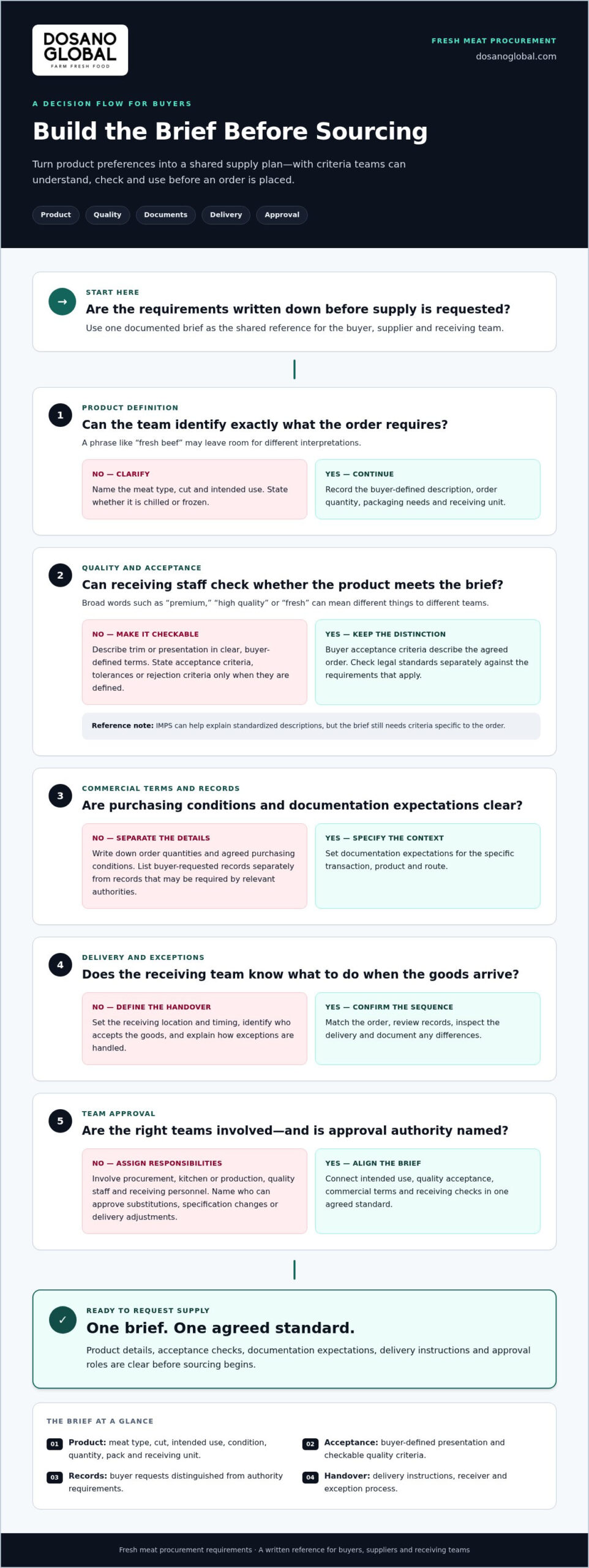
A procurement requirement is a documented expectation for the product and the supply arrangement. For fresh meat, it should state what your business needs, how staff will assess the order and what must happen before delivery is accepted. These fresh meat procurement requirements give the buyer and supplier one shared reference before sourcing begins.
Agree on the brief before requesting supply or placing an order. A phrase such as “fresh beef” can mean different cuts, presentations, quantities or conditions to different people. Specify each of these details so your supply partner can understand the request and coordinate the order and delivery against the same agreed requirements.
Organize the brief into distinct parts. Product specifications describe the meat and the criteria for acceptance. Commercial terms cover order quantities and agreed purchasing conditions. Documentation expectations list records requested by the buyer, separately from records that may be required by relevant authorities. Delivery instructions explain where and when goods are received, who accepts them and how exceptions are handled.
What belongs in a fresh meat procurement brief?
State the meat type, cut, intended use and buyer-defined product description. Specify whether the requirement is chilled or frozen, since these are different conditions, not interchangeable labels. Include the order quantity, packaging needs and receiving unit, meaning the unit used to order and count the goods. References such as Institutional Meat Purchase Specifications (IMPS) can help explain standardized descriptions, but the brief should still set out the criteria for your order.
Before requesting supply, decide:
- What meat type, cut and intended use does the order require?
- Is the product chilled or frozen, and what description will identify it?
- What quantity, packaging and receiving unit should the order use?
- Which quality criteria and documents will the buyer assess?
- What delivery instructions and exception process should apply?
Who should approve the requirements?
Involve procurement, the kitchen or production team, quality staff and receiving personnel. Each group has a different responsibility: intended use determines product suitability, quality defines acceptance, procurement aligns commercial terms, and receiving checks what arrives. Name the person authorized to approve substitutions, specification changes or delivery adjustments. This helps teams make decisions consistently instead of relying on informal approval at handover.
A clear brief reduces ambiguity by giving every team and supply partner one agreed standard for the order.
Fresh Meat Specifications: Set Clear Product and Quality Criteria
A useful specification replaces broad descriptions with details that can be understood and checked consistently. “Premium fresh meat” may express an intention, but it does not identify the cut, trim, condition or acceptance standard. Clear product criteria help prevent different interpretations across purchasing cycles and give receiving staff a practical basis for reviewing each delivery.
Describe meat type, cut, condition and packaging
Build each specification line around the product’s commercial use. Name the meat category and requested cut, describe the required trim or presentation in buyer-defined terms, and state whether the order is chilled or frozen. Record the packaging format and receiving unit so staff can compare the requested product and quantity with the delivery.
Standardized references can help buyers communicate product descriptions. The U.S. Department of Agriculture’s USDA IMPS specifications provide examples of structured meat specifications for institutional purchasing. Buyers in the UAE can use such references to inform their wording, while keeping the final requirements relevant to their operation and the rules that apply to the transaction.
- Product identity: meat category, cut and buyer-defined description.
- Presentation: trim or other relevant characteristics, described in clear terms.
- Condition and pack: chilled or frozen, plus the required packaging format.
- Acceptance: buyer-approved tolerances or rejection criteria, stated only when they are defined and verified.
Turn freshness and quality expectations into checks
Terms such as “fresh,” “high quality” and “premium” can mean different things to different teams. Use them as broad descriptors only when the brief also explains how staff will assess the product. For example, a receiving process might check whether packaging is intact, the product’s appearance aligns with the agreed description, and accompanying records match the order. State any tolerance or rejection threshold plainly instead of leaving it to assumption.
Buyer acceptance criteria define whether an order meets the agreed specification, while relevant authorities set legal standards that must be checked separately. Do not add shelf-life, temperature or microbiological limits without verifying the requirements that apply to the product and route. Codex Alimentarius guidance and HACCP are useful food-safety reference concepts, but mentioning them does not demonstrate that a supplier holds a certification or that a specific product meets a particular standard.
Precise criteria support commercial sourcing and quality review. Businesses procuring fresh meat can align product and delivery requirements with Dosano Global’s fresh meat supply.
Fresh Meat Procurement Documents and Delivery Requirements
A complete order needs more than a product description. Documents and delivery instructions should identify the same product, quantity and order reference from purchase through receipt. Requirements vary by product, route and applicable rules, so prepare a checklist for each transaction rather than assuming every order needs identical paperwork.
Separate two categories in the brief: records your business requests for purchasing, traceability or receiving, and documents required by relevant authorities. Origin, health, halal or import documents may apply in particular circumstances, but they are not universal requirements. Verify what applies to the specific product and route using current authoritative information before ordering. The U.S. Department of Agriculture’s Institutional Meat Purchase Specifications (IMPS) can help with consistent product descriptions, but it does not replace requirements for a UAE transaction.
Build a document checklist for each order
Start with the commercial records your team needs to match goods to the approved purchase. Include the order reference, product description, quantity, packaging or receiving unit, and delivery instructions. Add supporting product information your business requests, then list authority-required documents separately and only when their applicability has been verified.
Assign responsibility before dispatch. Identify who reviews the order details and supporting records before the goods leave, and who checks them at receipt. A clear line of ownership in the brief helps prevent a review from being assumed but left undone.
Set delivery and cold-chain expectations
Record the agreed delivery window, receiving contact, unloading arrangements and steps for delays or other exceptions. State the required product condition and any handling or temperature-record expectations in terms that match the approved specification. Use values and limits only after verifying the applicable requirements for the product and jurisdiction. Avoid generic thresholds that may not fit the transaction.
Keep documents consistent with the order. If the approved brief specifies a product description and quantity, accompanying records and delivery instructions should use the same references. This makes discrepancies easier to identify before acceptance and gives procurement, quality and receiving teams a shared basis for resolving them.
- Before dispatch: review the order reference, product description, quantity and required records.
- At delivery: check the arrival against the agreed window and receiving instructions.
- If details differ: record the discrepancy and follow the agreed escalation process.
Consistent documents turn a delivery check into a clear comparison against the approved order. Dosano Global sources and supplies fresh meat and poultry for commercial clients, with requirements aligned to buyer needs. Explore commercial fresh meat supply as part of your procurement planning.
Fresh Meat Receiving Checklist: Inspect, Record and Resolve Issues
Receiving is where staff compare the approved order with the goods that arrived. A consistent process helps them identify differences early, keep a clear record and refer decisions to the right person. Use the buyer’s documented criteria and site procedures rather than relying on memory or informal judgments.
What should staff check when fresh meat arrives?
Follow the same sequence for every delivery: match the order, review the accompanying records, inspect the goods against the agreed criteria, then document any exception. This connects the receiving decision to the fresh meat procurement requirements established before the order was placed.
- Match the order: Compare the order reference and delivery details with the approved purchase.
- Check identity and quantity: Confirm the product description, identifiers, packaging or receiving units, and delivered quantity against the order.
- Review records: Check the documents provided against the order and your site’s receiving process.
- Inspect against criteria: Assess packaging and applicable product condition using the buyer’s written acceptance criteria.
- Record the check: Note the inspection time, findings and any exception in the site’s receiving record.
Keep notes precise and factual. For example, record “one outer package is torn” or “delivered quantity differs from the order,” rather than making an unsupported conclusion about product safety. If your process allows, retain relevant evidence with the receiving record so the issue can be reviewed against the order details.
How should buyers handle a specification mismatch?
Pause the routine acceptance process for the affected goods and follow your organization’s approved food-safety and receiving procedures. Record the order reference, the expected and observed details, the quantity involved and any relevant evidence. Do not accept, use, return or dispose of affected goods based on an informal assumption. Follow applicable requirements and the buyer’s established decision process.
Make ownership clear. Receiving staff should know whom to notify, who can decide whether the goods meet the specification, and who communicates the resolution to the supply partner. If goods need to be held separately, use the site’s approved segregation procedure. Record the final disposition and any corrective action, including an agreed adjustment to the order or its records when appropriate.
A reliable receiving record connects what was ordered, what arrived and how any difference was resolved. For commercial fresh meat sourcing and supply, discuss your fresh meat supply requirements with Dosano Global.
Plan Fresh Meat Supply with a Commercial Procurement Partner
A complete procurement brief connects the product a business needs with the quality checks, records, delivery arrangements and receiving process used to assess each order. It gives the buyer and supply partner a shared working reference from the initial request through delivery, and helps keep expectations consistent as requirements change.
Prepare a buyer-ready supply brief
Bring the key decisions together in one document. Make the details specific enough for teams to request, supply and receive the same product without relying on assumptions. A practical brief can include:
- Product: meat type, cut, condition and buyer-defined description.
- Presentation: packaging format, order quantity and receiving unit.
- Quality: applicable buyer-defined checks and acceptance criteria.
- Records: documents requested for the transaction, with applicable requirements identified separately.
- Delivery: agreed instructions, receiving contact and process for exceptions.
- Communication: expected ordering patterns, authorized approvers and how changes will be shared.
Decide how updates will be handled before the first order. Identify who can approve a change to the product requirement, who should receive revised delivery information, and which version of the brief is current. This keeps procurement, quality and receiving teams aligned without making each order depend on scattered messages.
Move from requirements to a supply conversation
Dosano Global sources and supplies fresh meat and poultry for commercial clients in the UAE and international markets. Its commercial sourcing and supply supports buyers in aligning product descriptions, quality expectations and delivery requirements in a workable brief. Clear requirements also give both sides a practical basis for coordinating the order and reviewing it at receipt.
Use the checklist to prepare your requirements, then discuss how they can shape a supply arrangement. The fresh meat procurement requirements that matter most are those your teams can describe clearly, apply consistently and review against the delivered order.
Discuss your commercial fresh meat requirements with Dosano Global.
Put Your Procurement Brief to Work
Dependable fresh meat supply starts with shared expectations. A clear product description, condition, packaging and quantity help buyers and suppliers work from the same requirements. Defined quality checks and transaction-specific records make the order easier to assess, while a consistent receiving process helps teams identify and document differences promptly.
These fresh meat procurement requirements turn a purchasing request into a workable supply plan. Agree on them before ordering, assign responsibility for approvals and receiving, and keep delivery instructions aligned with the approved brief.
Dosano Global sources and supplies fresh meat and poultry for commercial clients across the UAE. A well-prepared brief gives the supply conversation a strong foundation and helps align buyer needs with practical procurement and delivery requirements.
Discuss your commercial fresh meat requirements with Dosano Global and take the next step toward a clear supply relationship.
Frequently Asked Questions
What should a fresh meat procurement specification include?
A fresh meat procurement specification should identify the meat type, cut, intended use, product condition, packaging format and order quantity. State buyer-defined quality criteria, required records, delivery instructions and receiving details so procurement, quality and receiving teams share the same reference. Separate checkable acceptance criteria from broad terms such as “premium.” These fresh meat procurement requirements help suppliers interpret the request consistently and give buyers a clear basis for reviewing the order.
Which documents should buyers request when procuring fresh meat?
Request the commercial and product records your business needs to match goods to the approved order, including its reference, product description and quantity. Any additional origin, health, halal or import documents depend on the product, route and applicable rules. Distinguish buyer-requested records from documents required by authorities, and verify current requirements for the specific transaction. Assign someone to review records before dispatch and a responsible person to check them at receipt.
How can a business assess fresh meat quality when it is delivered?
Compare the delivery with the approved order and the buyer’s written acceptance criteria. Check product identifiers, quantities, packaging condition, product appearance and accompanying records, using only checks relevant to the agreed specification. Record when the inspection took place and what staff observed. Describe exceptions factually, such as damaged packaging or a quantity difference, rather than making unsupported safety judgments. Follow your site’s procedures if a finding needs further assessment.
Can buyers specify chilled or frozen meat in the same procurement brief?
Yes, a brief can cover both, but list chilled and frozen requirements separately so no one treats them as interchangeable. Identify the required condition for each product line and connect it to the relevant description, packaging, quantity, acceptance criteria and delivery instructions. If a buyer will accept only one condition, state that clearly. The supplier and receiving team can then compare each delivered item with the right approved requirement.
What halal requirements should businesses include in fresh meat procurement?
State clearly whether halal compliance is required and identify the supporting documents or evidence your business expects for the specific product. Requirements can depend on the product, sourcing route and rules that apply to the transaction, so verify current UAE requirements with the relevant authority before ordering. Keep the buyer’s documentation request distinct from any legal requirement, and assign responsibility for reviewing the records before dispatch and at receipt.
How should a buyer handle fresh meat that does not match the order?
Document the mismatch against the approved order before making an acceptance decision. Record the order reference, expected and delivered details, quantity affected, inspection findings and relevant evidence. Follow your site’s approved food-safety and receiving procedures, including any steps for holding goods separately. Identify who can decide the disposition, communicate the issue to the supply partner and record the resolution or corrective action. Do not use informal assumptions to accept or reject affected goods.
How can businesses make fresh meat procurement more consistent?
Use a standard brief and receiving record for each order, with clear product descriptions, buyer-defined checks, document expectations and delivery instructions. Name the people authorized to approve changes, and set a consistent way to communicate updates. Review receiving exceptions and refine the brief when recurring ambiguities appear. Dosano Global sources and supplies fresh meat and poultry for commercial clients across the UAE.
[…] preparation, storage, or receiving, state it clearly and consistently. For a detailed checklist of fresh meat procurement requirements, set out these specifications, quality checks, documents, and delivery arrangements before placing […]