
 English
Meat Sourcing for Businesses in the UAE: A Practical Procurement Plan
Reliable meat sourcing is a procurement process, not a one-off supplier choice. A repeatable approach to meat sourcing for businesses UAE-wide helps...

Reliable meat sourcing is a procurement process, not a one-off supplier choice. A repeatable approach to meat sourcing for businesses UAE-wide helps turn changing demand into clear order quantities, product specifications, and delivery plans. Without that structure, inconsistencies can disrupt operations, while gaps in documentation or receiving checks can make supply harder to manage.
Dependable supply takes coordination from planning through delivery, with each step aligned to the product and handling requirements. This guide sets out a practical workflow for forecasting demand, defining specifications, organizing documentation, coordinating deliveries, and checking products on receipt. Dosano Global sources and supplies fresh meat and poultry for commercial clients, tailoring supply to commercial standards and delivery requirements. A clear process gives your team a consistent foundation for procurement.
Key Takeaways
- Build your sourcing plan around business type, product needs, order quantity, frequency, and delivery requirements.
- Use clear product specifications and documentation expectations to align orders with what your business receives.
- Assess meat sourcing for businesses UAE by comparing specification fit, supply consistency, documentation, delivery coordination, and communication.
- Plan forecasts, order cut-offs, delivery windows, and receiving capacity together to support consistent supply.
- Dosano Global supplies fresh meat and poultry to commercial clients, with supply tailored to defined business standards and delivery requirements.
Meat Sourcing for UAE Businesses: Start with Demand, Not a Supplier List
Meat procurement is a recurring operational decision. A restaurant, caterer, hotel, or institutional kitchen needs a sourcing plan that reflects which products it uses, how much it requires, and when deliveries can be received. Starting with demand gives buyers a clear brief before they discuss supply. That is the foundation of practical meat sourcing for businesses UAE-wide.
A procurement specification is the buyer’s written record of the product and delivery requirements a supply arrangement must meet. It turns day-to-day needs into clear inputs: business type, meat or poultry category, intended use, quantity, ordering frequency, and delivery conditions. A concise brief helps align requests, orders, and receiving routines.
Map business demand into a usable forecast
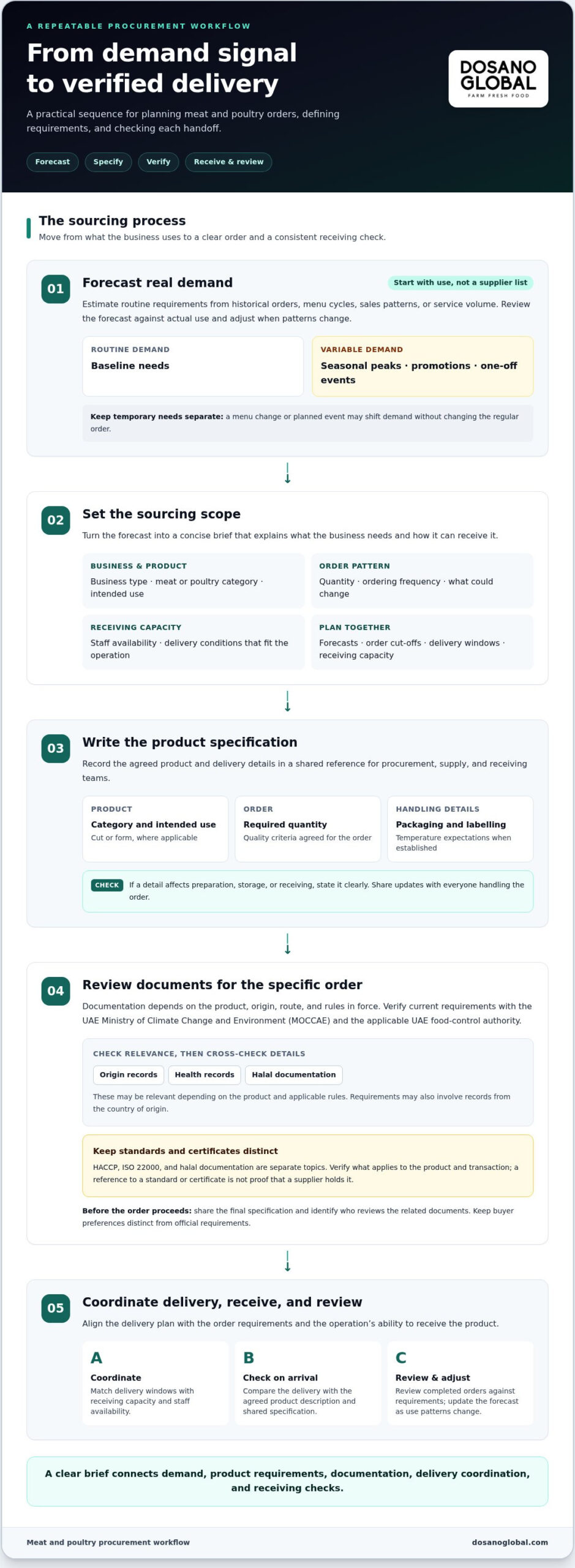
Use historical orders, menu cycles, sales patterns, or service volume to estimate routine needs. Separate baseline demand from seasonal peaks, promotions, and one-off events, since each may call for a different order plan. Review the forecast against actual use and adjust it when patterns change. This can help reduce urgent orders when demand rises unexpectedly and excess stock when purchases outpace business needs.
For example, a menu change may shift demand between product categories, while a planned event may create a short-term increase without changing regular requirements. Record these separately so a temporary spike does not become an unsuitable recurring order.
Set the sourcing scope for meat and poultry
Define the product category and intended business use before discussing supply. Record quantities, order frequency, and receiving constraints in one brief. Include practical details such as staff availability for receiving and delivery conditions that fit the operation. Handling expectations should support food safety principles and the business’s own procedures.
Keep the brief useful: state what is required, how often it is needed, and what could change. Distinguish regular requirements from seasonal, promotional, or event-driven orders, so planning can adapt without losing sight of routine demand. The next step is to define the product, documentation, and delivery details that make a sourcing request precise.
This guide focuses on planning meat and poultry requirements. Broader supplier-selection considerations belong in the pillar guide, while this demand-first approach gives buyers a practical starting point for repeatable procurement.
Define Meat Specifications, Documentation, and UAE Requirements
Clear specifications help procurement, supply, and receiving teams interpret an order consistently. For meat sourcing for businesses UAE-wide, precision matters at every handoff. A broad request such as “meat for the kitchen” leaves room for different assumptions about product form, quantity, packaging, and delivery.
A product specification describes what the buyer requires; regulatory documentation provides records needed to meet applicable official requirements. They serve different purposes, so keep them as separate parts of the procurement brief.
Build a written meat product specification
Describe the product category and intended use, then record the cut or form where applicable, required quantity, and any quality criteria agreed for the order. Include packaging, labelling, and temperature expectations when they have been established for that requirement. Avoid assumptions: if a detail affects preparation, storage, or receiving, state it clearly and consistently. For a detailed checklist of fresh meat procurement requirements, set out these specifications, quality checks, documents, and delivery arrangements before placing an order.
A shared specification gives procurement and receiving teams the same reference point. On arrival, staff can compare the delivery with the agreed description instead of relying on memory or informal messages. Keep the brief current as requirements change, and share each update with everyone handling the order.
Handle food-safety and trade documents accurately
The records relevant to a meat shipment can depend on its product, origin, route, and the rules in force. Build a document review around the specific order, and verify current requirements with the UAE Ministry of Climate Change and Environment (MOCCAE) and the applicable UAE food-control authority. Requirements may also involve records from the country of origin, so do not assume one checklist applies to every shipment.
Depending on the product and applicable rules, review whether shipment records such as origin, health, or halal documentation are relevant, and check that details align across the order and supporting paperwork. HACCP, ISO 22000, and halal documentation are distinct topics. Verify which requirements apply to the product and transaction rather than treating a reference to a standard or certificate as proof that a supplier holds it.
Before an order proceeds, procurement and receiving teams should share the final specification and identify who reviews the related documents. This keeps buyer preferences distinct from official requirements. Businesses developing a supply brief can explore commercial meat and poultry sourcing as part of a defined procurement plan.
Assess Meat Supply Against Consistency, Handling, and Delivery Needs
Assess a sourcing option against how your business orders, receives, and uses meat. For meat sourcing for businesses UAE-wide, a polished product description alone does not show whether requirements are understood consistently or delivery coordination suits your operation. Compare supply against the same criteria each time, then review completed orders against the agreed requirements.
Compare supply models against operating needs
One-off purchasing can suit occasional or event-driven needs, while planned recurring orders may help businesses with steady demand coordinate replenishment. Neither approach suits every operation. Match the ordering cadence to your forecast, available storage, and receiving hours. Agree on a contact for exceptions and a clear way to communicate order changes, so teams can respond without relying on scattered messages.
| Assessment area | What to compare |
|---|---|
| Specification fit | Does the proposed supply align with the product description and agreed order requirements? |
| Supply consistency | Are recurring orders handled against the same documented requirements, and are changes recorded? |
| Documentation | Are relevant order and shipment records available for review and aligned with the requirements that apply? |
| Delivery coordination | Do the agreed delivery arrangements fit receiving capacity, operating hours, and handling procedures? |
| Communication | Are order updates, exceptions, and next steps shared through clear points of contact? |
Include cold-chain handling in the assessment, and set handling and temperature expectations according to applicable product requirements and agreed procedures. At receipt, staff should follow the business’s food-safety process and record concerns rather than assume a delivery was handled correctly.
Turn quality expectations into receiving checks
Receiving checks put agreed requirements into daily practice. Compare the delivered product with the order and specification, then review its visible condition, labels, quantities, and relevant accompanying documents. If something differs, document the issue, notify the responsible contact, and track the resolution against the order record.
Judge consistency through repeatable evidence, not a single impression. Review order records over time to see whether specifications were met, documentation aligned, deliveries coordinated, and discrepancies followed through. This gives procurement a practical basis for adjusting instructions or ordering routines while keeping expectations clear across the supply chain.
Plan Meat Orders, Deliveries, and Supply Continuity
A dependable order cycle connects demand planning with delivery and receiving. For meat sourcing for businesses UAE-wide, agree on practical details before each order: order cut-offs, delivery windows, receiving capacity, and how changes will be communicated. Set these out clearly so procurement, kitchen or operations teams, and the supply partner work from the same schedule.
Create a repeatable order-to-receipt workflow
- Review demand and inventory. Compare the forecast for the next purchasing period with current stock, expected usage, and planned menu or service changes. Separate regular requirements from temporary increases, then identify what needs replenishment.
- Submit the order brief. Provide the agreed product specifications, quantities, and delivery requirements. Include the applicable order cut-off and preferred delivery window, along with receiving constraints that could affect coordination.
- Confirm, receive, and reconcile. Align on order details and receipt arrangements before delivery. At receiving, compare the delivery with the order, record quantities and relevant documents, and note any discrepancy. Reconcile the outcome against the order history so the next forecast reflects what was actually received.
Make receiving capacity part of the plan. A delivery window should suit the team’s availability and its ability to inspect and store products according to business procedures. If the schedule or quantity changes, communicate the update through an agreed contact route so it reaches the receiving team.
Prepare for changes without disrupting operations
Assign an internal owner for forecast updates, order changes, and receiving coordination. This person can keep the current order brief accessible and ensure updates reach procurement and operations. Document how to handle proposed substitutions, delays, or specification discrepancies, including who communicates the change and how the final decision is recorded.
Supply continuity depends on maintaining useful records, not simply repeating the same order. Keep order confirmations, changes, delivery outcomes, and discrepancy follow-ups together. Review recurring issues and adjust the forecast, receiving plan, or ordering instructions as needed. Clear escalation routes help teams respond when plans shift, while documented outcomes give future orders a more reliable basis.
Dosano Global sources and supplies fresh meat and poultry for commercial clients, tailoring procurement to business standards and delivery requirements. Discuss your meat sourcing requirements and establish a clear foundation for order planning.
Work with Dosano Global on Business Meat Sourcing in the UAE
With a demand forecast, written product requirements, and receiving plan in place, the next step is a focused supply discussion. Dosano Global sources and supplies fresh meat and poultry for commercial clients in the UAE and international markets. Its procurement and distribution approach is tailored to commercial standards and delivery requirements, helping businesses align a sourcing brief with supply planning.
Translate your procurement brief into a supply discussion
Share the details that shape your operation rather than relying on a broad product request. A useful starting brief covers:
- Product category and intended use: Identify the meat or poultry requirement and how the business uses it.
- Estimated demand and frequency: Outline expected quantities, recurring order patterns, and known changes in demand.
- Product specifications: Include relevant product details and agreed quality criteria that matter to your operation.
- Delivery requirements: Describe preferred delivery windows, receiving capacity, and relevant handling expectations.
These details connect commercial standards with day-to-day operating needs. If specifications or schedules vary by order, make those distinctions clear in the brief. Dosano Global tailors supply to defined commercial standards and delivery requirements, supporting a coordinated discussion from procurement through receipt.
Move from sourcing plan to business conversation
Start with three actions: define demand, document product specifications, and prepare the receiving process. Keep order frequency and delivery needs alongside those details, so the conversation reflects how your business purchases and receives meat. This gives both sides a clear reference for discussing requirements and coordinating procurement.
For businesses developing meat sourcing for businesses UAE-wide, Dosano Global is a commercial sourcing and supply partner for fresh meat and poultry. A clear brief helps focus the discussion on the requirements that matter, without treating every order as identical.
Ready to discuss your business requirements? Contact Dosano Global about meat sourcing and share your product, demand, and delivery needs.
Build a More Consistent Meat Procurement Plan
Reliable meat sourcing for businesses UAE-wide starts with a clear view of demand, followed by written product requirements and coordinated delivery and receiving plans. Reviewing order outcomes helps teams refine forecasts, address discrepancies, and make future procurement decisions with greater confidence.
Dosano Global sources and supplies fresh meat and poultry for commercial clients, tailoring procurement and distribution to commercial standards and delivery requirements. This supports businesses in the UAE and international markets as they align supply with defined operational needs.
Put your sourcing plan into practice with a focused business conversation. Discuss your business meat sourcing requirements with Dosano Global and take the next step toward a clear, repeatable procurement process.
Frequently Asked Questions
How should a business plan meat sourcing in the UAE?
Plan meat sourcing by forecasting demand, defining product specifications, setting an order frequency, coordinating delivery, and reviewing receiving outcomes. Use order history, menu or sales plans, and expected service volume to estimate quantities, then adjust for known changes. Align the plan with storage and receiving capacity. For meat sourcing for businesses UAE-wide, account for your operating needs and verify the requirements that currently apply to the product and supply.
What information should a meat procurement specification include?
A meat procurement specification should describe the product category, cut or form where applicable, required quantity, agreed quality criteria, packaging and labelling expectations, and delivery conditions. Make each requirement clear enough for procurement and receiving teams to use consistently. Keep commercial specifications separate from regulatory documentation: one describes what your business orders, while the other supports applicable official requirements. Do not assume requirements are identical across different products or origins.
How can a UAE business assess meat supply consistency?
Assess consistency by tracking each order against agreed specifications, quantities, delivery arrangements, and documented receiving results over multiple orders. Record exceptions, such as a quantity mismatch or a delivery detail that differed from the plan, and note how they were communicated and resolved. This history gives a more useful view than one successful delivery. Clear communication supports coordination, but no sourcing arrangement eliminates every possible disruption.
Which documents may be relevant when sourcing meat for a UAE business?
Relevant documents depend on the product, origin, shipment, and current applicable rules, so there is no universal checklist for every order. Identify requirements for the specific supply through the Ministry of Climate Change and Environment (MOCCAE), the applicable UAE food-control authority, and relevant trade documentation. Keep records connected to the product and shipment, and verify requirements as they apply rather than assuming one set covers every sourcing situation.
How can a business manage meat delivery and receiving requirements?
Agree on delivery windows, receiving capacity, product specifications, and communication routes before placing the order. At receipt, compare quantities and product details with the order, review relevant labels and accompanying documents, and record discrepancies promptly. Make sure the receiving team knows whom to notify and how issues will be tracked. Align handling instructions with applicable requirements and business procedures, so receiving is coordinated with safe storage and operations.
How often should a business review its meat procurement plan?
Review the procurement plan whenever demand patterns, menu or sales plans, storage capacity, delivery constraints, or product requirements change. Order history and receiving records can also reveal recurring mismatches that call for updates to forecasts or ordering instructions. There is no single review interval suited to every operation. Set a cadence that reflects how quickly your business needs change, and revisit the plan when an unexpected shift affects supply or receiving.
Can one sourcing plan work for both meat and poultry?
Shared planning tools can support meat and poultry procurement, including demand forecasts, order records, and delivery coordination. However, define clear specifications and identify applicable documentation for each product category rather than treating requirements as interchangeable. Keep orders and receiving records distinct where needed, so teams can trace what was requested and delivered. A common workflow creates consistency, while category-specific details keep each requirement clear for procurement and operations.
[…] Keep the information concise and consistent. You do not need an exhaustive procurement file to begin a supply discussion. More detailed planning, such as organizing requirements for purchasing decisions, can be developed through a practical meat sourcing and procurement plan for UAE businesses. […]